Best Solvent Pigments for 2026 Which Ones to Choose?
In the evolving landscape of colorants, solvent pigments are gaining significant attention for 2026. Leading the way in performance and versatility, these pigments are vital for industries like automotive, coatings, and textiles. According to a recent industry report by Market Research Future, the global solvent pigment market is projected to grow at a CAGR of over 5% through the next few years. This growth highlights the ongoing demand for high-quality solvent pigments.
As industry expert Dr. Emily Wong notes, "Solvent pigments are crucial for achieving vibrant colors and durability." Her insight emphasizes the importance of selecting the right solvent pigments for specific applications. However, choosing the best can be challenging. Some products may not meet performance expectations or environmental regulations, requiring manufacturers to remain vigilant.
In this dynamic market, understanding the various options available is essential. Organizations must consider factors such as colorfastness, solubility, and environmental impact. Ultimately, selecting the right solvent pigment can significantly influence product quality and market success.

Overview of Solvent Pigments and Their Applications
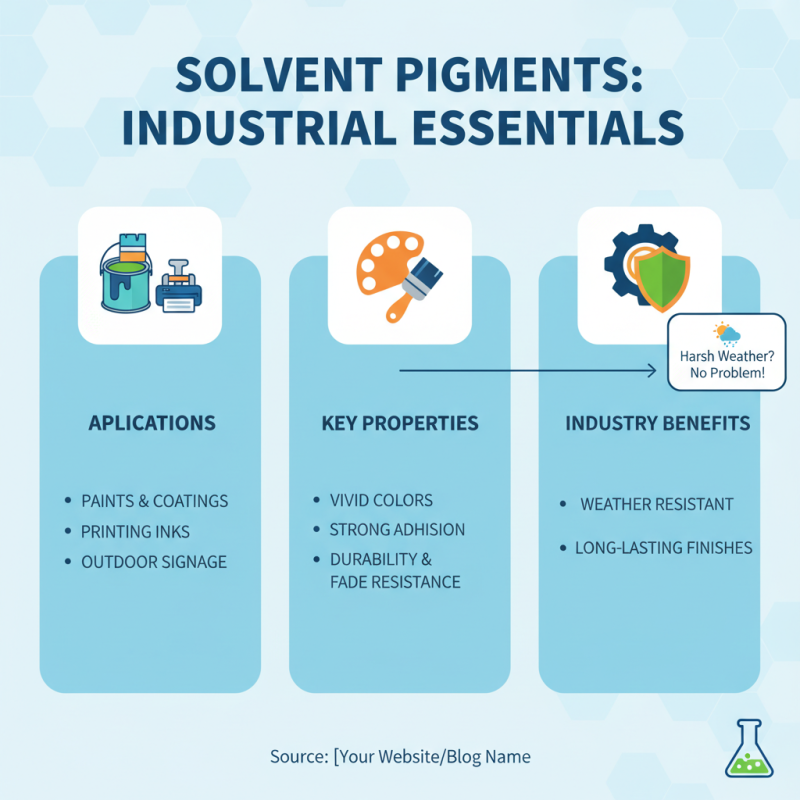
Solvent pigments are essential in various industries. They are used in paints, coatings, and inks. The unique properties of these pigments allow for vivid colors and strong adhesion. Many applications require durability and resistance to fading. For example, outdoor signage needs pigments that withstand harsh weather.
Choosing the right solvent pigment can be challenging. Each pigment has different characteristics. Some offer high transparency while others provide excellent coverage. The choice often depends on the application requirements. A vibrant color might look appealing, but it may not last long outdoors.
In the art world, solvent pigments are popular for creating vibrant murals. Artists appreciate the boldness in their work. However, some report issues with blending and consistency. This indicates the need for careful consideration before selection. In industries, the selection process involves trial and error, which can be frustrating. Balancing color quality with performance is not always straightforward.
Key Properties to Consider When Selecting Solvent Pigments
When selecting solvent pigments for 2026, it's essential to consider their key properties. Colorfastness is crucial. You want pigments that maintain their vibrancy over time. Also, opacity plays a role in your choice. A highly opaque pigment can cover surfaces better, ensuring that your final product appears professional.
Another aspect is solubility. Good solvent pigments dissolve easily in the chosen solvent. This ensures consistency in application and reduces the risk of clumping. Stability is equally important. You want pigments that withstand varying environmental conditions without losing quality.
Tips: Check for pigment compatibility with your materials. Conduct small tests before large-scale application. Also, consider the drying time. This can affect the workflow and the final quality.
Lastly, toxicity is a vital concern. Many pigments may release harmful fumes during application. Prioritize safety standards in your selection. Always review the safety data sheets. They provide important information on handling and storage. Taking these considerations into account will guide you in making a more informed decision.
Top Solvent Pigments Projected for 2026
The bond between art and industry is deepening, especially with solvent pigments. As we approach 2026, predicting the leading solvent pigments becomes vital for various projects. Industry reports suggest a growing demand for vibrant colors that maintain durability and performance. By 2026, the market for solvent-based colors is expected to grow by 5% annually.
When considering the best solvent pigments, look for those that offer superior adhesion and lightfastness. Colors like bright reds and deep blues are expected to be at the forefront. The shift towards environmentally friendly options may influence choices. Sustainable pigments will likely play a crucial role in meeting regulations.
Tip: Always check the pigment’s safety data sheets. This can provide critical information about handling and health risks. Choose reputable suppliers who can ensure quality consistency.
Not every pigment performs well in all conditions. For instance, some may fade quicker in direct sunlight. Testing on various substrates is necessary to see how pigments react. Users should document their findings for future reference. This approach will help refine selections.
Best Solvent Pigments for 2026 Which Ones to Choose? - Top Solvent Pigments Projected for 2026
| Pigment Name |
Color Characteristics |
Purity Level (%) |
Application Areas |
Projected Market Growth (%) |
| Solvent Yellow 160 |
Bright Yellow |
95 |
Inks, Coatings |
12 |
| Solvent Blue 36 |
Vivid Blue |
98 |
Plastics, Inks |
15 |
| Solvent Red 149 |
Deep Red |
99 |
Textiles, Coatings |
10 |
| Solvent Green 7 |
Rich Green |
96 |
Inks, Plastics |
18 |
| Solvent Black 28 |
Jet Black |
97 |
Inks, Coatings |
14 |
Comparative Analysis of Leading Solvent Pigment Brands
In the evolving world of solvent pigments, 2026 presents exciting options. The market has projected growth due to an increasing demand for high-quality and durable pigments. According to industry reports, the solvent pigment market is expected to reach approximately $5 billion by 2026. The requirement for eco-friendly solutions is also becoming prominent.
A comparative analysis of leading solvent pigment brands reveals varying performance aspects. Some pigments offer excellent color strength and stability, which are essential for long-term projects. Others fall short, with issues like fading under UV light. It's crucial to choose pigments that meet specific industry standards. For instance, high durability is a must for exterior applications.
Tips: Always analyze the pigment's chemical composition. Understanding the formulations can lead to better performance in applications. Conduct tests to assess lightfastness and solubility. Not every pigment will perform as expected. Some may have issues with consistency or application.
Selecting the right solvent pigment is a nuanced journey. Each option comes with its benefits and limitations. Reflecting on past experiences can inform future choices.
Future Trends in Solvent Pigment Technology and Sustainability
The pursuit of sustainable solvent pigments is gaining momentum. Industry players are exploring eco-friendly alternatives. These advancements aim to reduce environmental impact. For instance, there’s a shift towards bio-based solvents. They offer similar performance but with a lower carbon footprint. This innovation could transform how artists and manufacturers approach color.
Still, challenges remain in this transition. Not all bio-based options provide the same vibrancy and longevity. The art community may resist change, favoring traditional materials. Therefore, educating users is crucial. Awareness will drive demand for sustainable choices. Testing and feedback cycles must improve. We may need to rethink our definitions of quality in color.
Sustainability doesn’t mean sacrificing performance. There’s potential for smarter formulations that meet both needs. Collaboration across sectors can spark creativity. Developing pigments that are less harmful to health is vital. As we look to 2026, the focus on safety will only intensify. The evolution of solvent pigments is an ongoing journey, and there’s much to learn.