

Blog
How to Choose the Best Industrial Defoamer for Your Process
Choosing the best Industrial Defoamer is not a matter of selecting the strongest product. It requires matching chemistry, process conditions, and production targets. Foam can reduce tank capacity, disrupt filtration, slow filling, and create inconsistent surface quality. In a paper mill, one unstable foam layer may affect drainage within minutes. In wastewater treatment, excess foam can also signal biological or chemical imbalance.
Market research shows why this decision deserves careful attention. Grand View Research identifies water treatment, paints and coatings, food processing, and pulp and paper as important defoamer application sectors. Its industry analysis also highlights growing demand for process efficiency and lower operating waste. MarketsandMarkets similarly reports that silicone, mineral oil, and water-based defoamers serve different performance requirements across industrial applications. These reports provide useful direction, but they do not replace plant-specific evidence.
Start with the foam mechanism. Is the foam caused by surfactants, proteins, air entrainment, or high-speed mixing? Then examine temperature, pH, shear, residence time, and downstream compatibility. A product that works in a cold laboratory beaker may fail inside a 90°C process vessel. The wrong dosage can create deposits, surface defects, or wastewater complications. That assumption is often wrong.
Reliable selection combines supplier documentation, technical data sheets, and controlled trials. Compare knockdown speed, persistence, dosage, dispersion, and final-product impact. Request independent testing where quality risks are significant. The best choice is rarely the cheapest drum. It is the product that remains stable, measurable, and compatible under real operating conditions. No spreadsheet replaces a plant trial.
Define the Role of Defoamers in Industrial Processes
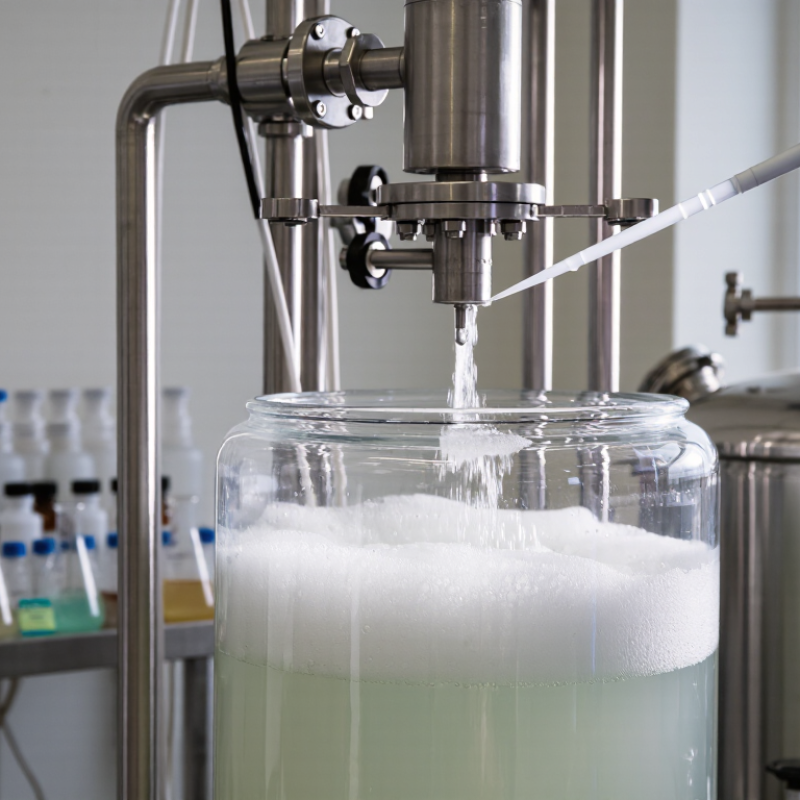
In industrial processes, defoamers control unwanted foam during mixing, pumping, heating, and filling. Foam can reduce tank capacity and interrupt stable production. It may also trap air, causing inaccurate volume measurements or surface defects. A defoamer works by weakening foam films and helping bubbles collapse. Its role is practical, not cosmetic. The correct product protects process consistency without changing the main formulation.
Selection should begin with the foam’s cause. High-speed agitation, surfactants, temperature changes, and contamination can create different foam patterns. A defoamer suitable for wastewater may perform poorly in coatings or chemical processing. Check viscosity, pH, temperature, and contact time before testing. Add small doses during a controlled trial. Observe foam height, bubble recovery, surface appearance, and filtration behavior. In my experience, overdosing often creates new defects. That mistake is easy to make.
Tips:
- Test at real operating temperature.
- Compare several dosages.
- Watch the process after one hour, not only immediately.
- Check whether the defoamer affects gloss, adhesion, clarity, or downstream separation.
- Keep detailed trial records, including mixing speed and addition point.
- A perfect choice is uncommon.
- Reassessment may be necessary when raw materials or equipment change.
Identify the Causes and Types of Foam in Your System
Foam rarely has one cause. In water treatment, it may come from surfactants, proteins, oils, polymers, or biological activity. The European Commission’s 2016 Best Available Techniques Reference Document links persistent foam with surface-active substances, high gas loading, and poorly controlled biological treatment. Airflow can also create temporary foam when bubbles rise faster than liquid drains.
Look closely at the foam. Fine, white bubbles often suggest surfactants or excessive aeration. Brown, stable foam can indicate biological solids, aged sludge, or microbial polymers. Oily foam feels slippery and may leave a colored film on a glass sample. It can be deceptive. A clear tank does not always mean a clean process. Dissolved gas may remain trapped inside the liquid.
A practical diagnosis starts with records, not a defoamer. Measure foam height at zero, one, and five minutes. Note bubble size, color, odor, pH, temperature, dissolved oxygen, and recent chemical changes. ASTM D1173 offers a controlled foam-height method for surfactant solutions, but plant conditions are less tidy. That limitation matters. The World Bank’s 2019 wastewater report estimated that more than 80% of global wastewater is discharged without adequate treatment, making reliable process control essential. Compare samples before and after aeration, mixing, and filtration. If foam collapses quickly, mechanical control may work. If it survives several minutes and carries solids, the root cause may be biological or chemical rather than purely mechanical.
Match Defoamer Chemistry to Process Conditions
Choosing an industrial defoamer starts with the process, not the foam alone. In water-based systems, match the chemistry to surface tension, pH, temperature, and shear. Silicone-based defoamers often break persistent foam quickly at low dosage. They can, however, create surface defects or interfere with coatings. Mineral-oil or polyether chemistries may disperse more gently. Their performance can weaken under intense agitation or high heat. Small differences matter.
For alkaline cleaning baths, test an alkali-tolerant defoamer at operating temperature. A product that works in a beaker may fail beside a high-speed pump. Check foam height after circulation, not after hand stirring. Record dosage, residence time, conductivity, and visible deposits. In wastewater treatment, avoid chemistry that traps solids or reduces downstream separation. For water-sensitive formulations, confirm emulsion stability and drying behavior. I have seen overdosing suppress foam while leaving an oily film on equipment.
Run a staged trial: untreated control, low dose, and two higher doses. Use the lowest effective concentration, then inspect product quality after 24 hours. Compatibility deserves equal attention. A defoamer may solve foam but cloud a clear solution, weaken adhesion, or affect filtration. That trade-off is easy to miss. Review results with operators, because pump speed and cleaning intervals change real exposure. No lab test fully reproduces a production line. Recheck after seasonal temperature changes and raw-material substitutions.
How to Choose the Best Industrial Defoamer for Your Process - Match Defoamer Chemistry to Process Conditions
| Defoamer Chemistry | Typical Process Conditions | Primary Strengths | Potential Limitations | Compatibility Considerations | Typical Starting Dosage* | Common Industrial Uses |
|---|---|---|---|---|---|---|
| Silicone-Based Polydimethylsiloxane (PDMS) | Aqueous systems Low to moderate viscosity Effective across many pH conditions and over a broad temperature range, provided the formulation is properly dispersed. | Very high foam knockdown efficiency at low use levels; effective against persistent surface foam and entrained air in many water-based processes. | May cause surface defects, cratering, fisheyes, or intercoat adhesion problems in coatings, inks, and adhesive applications if poorly selected or overdosed. | Check compatibility with coatings, printing inks, adhesives, membranes, and downstream surface treatments. Emulsion stability and dispersion quality are important. | 0.005–0.10% active defoamer on total formulation weight | Wastewater treatment, fermentation, coatings, latex processing, pulp and paper, textile processing, and chemical manufacturing |
| Silicone-Polyether Copolymer | Aqueous systems High shear Spray or recirculation Useful when rapid foam collapse and controlled surface behavior are both required. | Combines silicone efficiency with polyether functionality; often provides rapid defoaming and improved spreading or surface control compared with conventional silicone emulsions. | Performance can vary substantially with polyether structure, molecular weight, and formulation. Excessive dosage may affect coating appearance or recoatability. | Evaluate gloss, slip, leveling, intercoat adhesion, and recoating behavior in surface-sensitive formulations. | 0.01–0.20% active defoamer on total formulation weight | Water-based coatings, inks, adhesives, construction chemicals, polymer dispersions, and industrial cleaners |
| Polyether-Based EO/PO Copolymer | Aqueous systems High shear Wide pH range Particularly useful where low surface defects and good compatibility are more important than maximum knockdown speed. | Good compatibility, low tendency to create silicone-related surface defects, and useful control of microfoam in many water-based formulations. | May be slower or less powerful than silicone chemistry against severe macrofoam. Some grades can stabilize foam if the structure is not correctly matched to the process. | Review cloud point, hydrophilic-lipophilic balance, electrolyte tolerance, and interaction with surfactants, polymers, and wetting agents. | 0.05–0.50% active defoamer on total formulation weight | Water-based coatings, detergents, cleaning products, agrochemical formulations, polymer emulsions, and textile auxiliaries |
| Mineral Oil-Based | Moderate shear Aqueous slurries Pigment-rich systems Suitable for processes where cost efficiency and broad raw-material tolerance are important. | Generally economical; can provide reliable foam control in pigment slurries, wastewater, paper chemicals, and other heavily loaded aqueous systems. | May contribute to surface oiling, deposits, odor, reduced gloss, or filtration problems. Usually less effective than silicone at very low dosage. | Confirm compatibility with pigments, fillers, membranes, biological treatment, absorbent substrates, and final surface requirements. | 0.10–1.00% active defoamer on total formulation weight | Pulp and paper, mineral processing, wastewater treatment, pigment dispersions, construction materials, and industrial processing liquids |
| Vegetable Oil or Ester-Based | Aqueous systems Moderate temperature Biodegradability focus Often selected for processes that prefer renewable or readily biodegradable raw materials. | Can offer good foam control with a favorable environmental profile and useful compatibility in selected process formulations. | Oxidation stability, odor, microbial stability, and temperature resistance may be lower than those of fully synthetic alternatives unless the formulation is stabilized. | Check resistance to rancidity, storage stability, microbial preservation, and compatibility with alkaline or oxidizing process chemicals. | 0.10–1.00% active defoamer on total formulation weight | Food and beverage processing aids, fermentation, wastewater treatment, agricultural formulations, pulp and paper, and bio-based products |
| Wax or Fatty Alcohol-Based | High-viscosity systems Moderate to high temperature Persistent foam Appropriate when foam is stabilized by polymers, surfactants, fibers, or suspended solids. | Good persistence and useful knockdown in viscous or solids-loaded systems; can remain effective during extended processing. | May require elevated temperature or adequate mixing to disperse. Can leave deposits or affect surface appearance if overdosed. | Assess melting point, dispersion temperature, filterability, deposit formation, and interaction with resins, fibers, and particulate solids. | 0.10–1.00% active defoamer on total formulation weight | Pulp and paper, polymer processing, construction compounds, starch processing, coatings, and high-solids slurries |
| Water-Based Defoamer Emulsion | Cold-process addition Aqueous formulations Easy metering Useful where convenient handling, low VOC contribution, and uniform dispersion are required. | Easy to pump and dose; can be tailored with silicone, mineral oil, vegetable oil, or polymeric active materials for different process needs. | Freeze-thaw stability, storage stability, dilution stability, and compatibility with electrolytes must be verified. Excessive dilution can reduce performance. | Match the emulsion type to process pH, ionic strength, temperature, and shear. Avoid prolonged storage after excessive dilution. | 0.05–0.50% as supplied product on total formulation weight | Water treatment, coatings, adhesives, detergents, paper chemicals, textile processing, and chemical production |
| Solvent-Based Defoamer | Solvent-borne systems Low-water formulations High-temperature processing Selected when an aqueous emulsion cannot disperse effectively in the process medium. | Good compatibility with solvent-borne resins and non-aqueous media; can provide rapid foam release during mixing, filling, or application. | May increase VOC content, flammability, odor, and regulatory burden. Incorrect solvent balance can cause haze or poor incorporation. | Verify solvent compatibility, flash point, resin solubility, VOC limits, worker-safety requirements, and final film appearance. | 0.05–0.50% as supplied product on total formulation weight | Solvent-borne coatings, inks, sealants, adhesives, petroleum processing, and specialty chemical formulations |
Evaluate Performance, Compatibility, Safety, and Cost
Choosing the best industrial defoamer requires more than watching foam disappear. Evaluate performance under real operating conditions, including temperature, pH, shear, and solids content.
A fast knockdown may look impressive. It may not last. In pilot trials, measure foam height, collapse time, dosage, and process stability. Repeat tests during start-up, continuous operation, and cleaning cycles. Compatibility deserves equal attention. A defoamer may reduce foam yet damage coating quality, filtration, seals, membranes, or downstream adhesion. Test it against raw materials and equipment before full production.
Safety should be assessed through current safety data sheets, handling instructions, exposure controls, and storage requirements. Consult qualified safety personnel when reviewing risks and applicable local requirements. Use documented technical data, but verify every claim in your own process. That gap matters. Cost evaluation should include dosage, labor, cleaning, waste, downtime, and possible overdosing.
Tips: Run a controlled jar test, then a small production trial. Compare equal results by total operating cost, not purchase price alone. Keep a simple record. If operators need repeated corrections, the defoamer may not be truly economical. Review findings with production, quality, maintenance, and environmental teams.
How to Choose the Best Industrial Defoamer for Your Process
Compare the main selection criteria before confirming a defoamer through laboratory screening and a controlled plant trial.
This indicative, non-brand screening profile compares common industrial defoamer chemistries on a normalized 0–100 scale. Silicone-based products often provide strong knockdown, while polyether and EO/PO chemistries are commonly selected when compatibility and formulation stability are priorities. Mineral-oil systems may offer lower purchase cost, but process performance, downstream coating quality, regulatory requirements, and wastewater behavior should be verified for each application.
Test, Optimize, and Monitor the Selected Defoamer
Choosing an industrial defoamer requires more than comparing dosage prices. Test the candidate in the actual process liquid, not plain water. Collect a fresh sample from the production line. Record its temperature, pH, solids content, and mixing speed. These details change foam behavior.
Use a clear 500-milliliter beaker and reproduce the plant’s agitation as closely as possible. Measure foam height after one, five, and ten minutes.
Check whether the defoamer collapses foam quickly or only delays its return. A fast result is not always the best result. Excessive dosage may create surface defects, filtration problems, or unwanted deposits.
Our first dosage choice is often wrong. That is useful information, not failure.
Test three dosage levels, including one below the supplier’s recommendation. Add the defoamer at the same process point used in production. Compare treated and untreated samples under identical conditions.
After selecting a promising option, run a controlled plant trial. Monitor foam height, pump performance, product appearance, and downstream filtration. Keep the dosage log beside the control panel.
Review results across several shifts, because one quiet batch can mislead the team. If performance declines, check temperature, contamination, residence time, and raw material changes before increasing dosage.
Small adjustments matter. Recheck compatibility after every major process change.

