2026 How to Choose the Best PET Release Film for Your Needs?
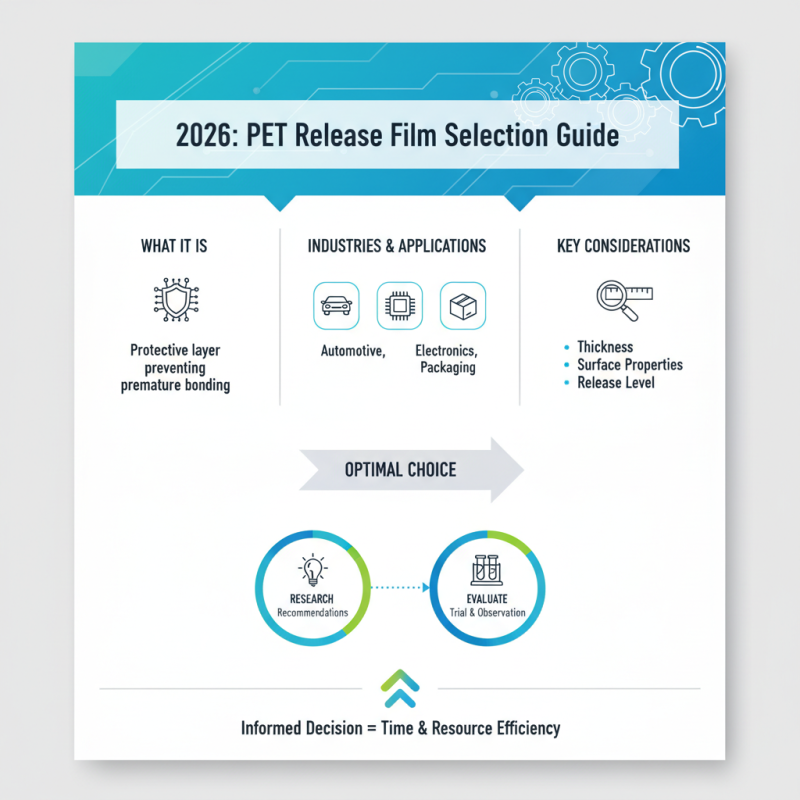
Choosing the right PET Release Film can significantly impact your projects. With various options available, it’s vital to understand their unique characteristics. This film type serves as a protective layer, ensuring that adhesives do not prematurely bond during the manufacturing process.
PET Release Film is widely used in various industries, including automotive, electronics, and packaging. Each application demands specific performance features. Factors like thickness, surface properties, and release levels must be carefully considered. Understanding these elements can lead to better choices that cater to your specific needs.
While many products claim to offer excellent quality, not all meet the required standards. It's essential to research suppliers and seek recommendations. An informed decision can save time and resources while improving overall efficiency. A bit of trial and observation may also be necessary to find the ideal film for your applications.
Understanding PET Release Film: Properties and Benefits
PET release films are essential in various industries. They offer unique properties that enhance performance across applications. Their primary function is to separate layers in manufacturing processes, especially in adhesive and coating applications. The film's smooth surface ensures minimal friction, leading to efficient handling and application.
One major benefit of PET release films is their excellent chemical resistance. According to a recent industry report, over 70% of manufacturers prefer PET materials for their durability. This film can withstand harsh solvents and chemicals without compromising its integrity. Additionally, the temperature resistance of PET films ranges from -40°C to 120°C, making them versatile for different environments. However, it's crucial to consider that not all PET films are created equal. Initial costs can be higher than alternatives, which may deter some users.
Moreover, manufacturers must recognize the environmental impact of their choices. While PET is recyclable, the process can be complex, and not all facilities can handle it efficiently. Addressing these challenges requires a balance between performance, cost, and sustainability.
Understanding these properties is vital for making informed decisions in your application.
Types of PET Release Films: A Comprehensive Overview
When selecting the right PET release film, understanding the various types is crucial. PET release films come in several categories, each suited for specific applications. These films can be classified into silicone-coated films, which provide excellent release properties and are ideal for adhesive applications. Another type includes non-silicone films, which are valuable in industries like packaging and electronics due to their cost-effectiveness and efficient release characteristics.
Tips for choosing the right film: consider the application process. Ensure that the release film aligns with your substrate. Test samples whenever possible to assess performance. Also, take note of the environment; extreme temperatures or humidity can influence film performance.
Each type of PET release film has its strengths and weaknesses. Silicone-coated films may be more reliable but can be pricier. In contrast, non-silicone options are often less expensive but may not perform as well in certain conditions. Reflecting on these factors can help address potential challenges before committing to a specific film, ensuring you choose the best option for your needs. Be aware of your priorities, whether it’s cost, performance, or environmental impact, to make an informed choice.
Key Factors to Consider When Selecting PET Release Film
When selecting PET release film, several key factors come into play. The thickness of the film is crucial; it directly affects the release properties and durability. According to industry reports, films ranging from 25 to 125 microns are commonly used, with thinner films offering more flexibility. However, they may not withstand harsher conditions. Assessing your application can help determine the most suitable thickness.
Release characteristics are significant in your decision-making process. A higher release agent coating can enhance performance but might raise costs. Many studies suggest that getting the right balance is essential. For example, some applications may require a more aggressive release, while others benefit from a gentle release to prevent damage.
Tips: Always test samples in your specific application. The results can vary widely. Consider the environmental aspect too. Many manufacturers are shifting toward eco-friendly options, aligning with sustainable practices. This choice could bolster your brand's reputation while meeting regulatory standards. Evaluate all these factors comprehensively, and ensure you make an informed decision.
Applications of PET Release Film Across Various Industries
PET release films are widely used across various industries for their excellent properties. These films provide a non-stick surface that is crucial for applications in the adhesive, graphics, and automotive sectors. In the adhesive industry, for example, PET release films prevent sticking during the production process. This enhances efficiency and reduces waste.
In the graphics industry, PET release films serve as a barrier between printed materials and their backing sheets. They ensure that images remain intact until applied. Moreover, in automotive applications, these films protect sensitive surfaces during manufacturing. Their durability and integrity are vital, especially when dealing with high temperatures.
Choosing the right PET release film can be challenging. Consider factors like thickness, clarity, and release strength. Each application might require a different specification. Testing samples before finalizing is advisable. This allows for a practical assessment of performance in real-world conditions. Not every film will perform as expected, leading to potential issues.
Cost-Effectiveness and Sourcing: Optimizing Your PET Film Choices
When selecting the best PET release film, cost-effectiveness plays a crucial role. The right choice can save money while ensuring quality. Evaluate various sourcing options to find competitive prices without compromising performance. This balance is essential for budget-conscious projects.
Tips: Always obtain samples before making a bulk purchase. Testing the film in your specific application ensures it meets your needs. Consider multiple suppliers to compare cost and quality. This can reveal hidden gems that offer better terms.
Procuring PET films requires careful consideration of specs. Factors such as thickness, release characteristics, and compatibility with other materials are pivotal. Sometimes, films that seem appropriate may not function as expected in real-world applications. It’s vital to review and provide feedback on the films you test.
Industry standards can help gauge reliability. However, every application differs. There is no one-size-fits-all solution. Reflecting on previous sourcing decisions can guide future purchases. Ensuring that your choices align with your project goals and budget is essential for long-term satisfaction.
2026 How to Choose the Best PET Release Film for Your Needs?
| Film Type | Thickness (microns) | Release Force (g/inch) | Temperature Resistance (°C) | Application | Cost per Sq Ft ($) |
| Standard PET | 50 | 20 | 120 | Labeling | 0.10 |
| High-Temperature PET | 75 | 25 | 160 | Electronics | 0.15 |
| Low-Release PET | 50 | 10 | 120 | Decorative Films | 0.12 |
| Anti-Static PET | 50 | 18 | 140 | Packaging | 0.11 |
| Perfume PET | 60 | 15 | 120 | Cosmetics | 0.14 |

