How to Choose the Right Chemical Distributor for Your Business Needs?
Choosing the right chemical distributor is crucial for your business's success. A reliable distributor can directly impact your operations and product quality. Many factors should be considered. Location matters, as proximity can reduce shipping times.
Additionally, evaluating a distributor's product range is essential. Do they offer the specific chemicals your business requires? Consider their reliability and customer service. A distributor should be responsive to your needs and concerns. Poor communication may lead to costly mistakes and delays, which can be frustrating.
It’s important to assess their industry experience. A knowledgeable chemical distributor can provide valuable insights. They can offer advice on regulatory compliance and safety protocols. Without proper guidance, your business could face significant challenges. Selecting the right partner requires careful thought and reflection.
Identifying Your Business's Chemical Supply Requirements
Choosing the right chemical distributor starts with understanding your specific business needs. Evaluate your production processes and the types of chemicals used. This assessment helps clarify the quality and quantity you require. A small batch operation might need a different supplier than a large-scale manufacturer.
Consider not just the chemicals, but also logistical aspects. Think about delivery times and geographic coverage. Can they ship to your location promptly? Communication is essential, too. A distributor that doesn’t respond quickly may lead to delays in your operations.
Don’t overlook regulatory compliance. Ensure potential partners follow safety standards and have appropriate certifications. However, some distributors might not keep their documentation updated. This could lead to unforeseen issues down the line. Always verify their credentials. A little attention now can prevent larger problems later.
Evaluating the Reliability and Reputation of Distributors
When choosing a chemical distributor, assessing their reliability and reputation is vital. Start by researching their track record. Look for feedback from other customers. Reviews can provide insight into their service quality. A distributor’s history with product delivery is also important. Delays can impact your business operations.
Tips: Consider asking for references. Reach out to these contacts to gain a clearer picture. This step can reveal underlying issues you might miss in online feedback.
Another critical aspect is compliance with industry standards. Ensure the distributor adheres to safety regulations. Check if they offer detailed documentation for their products. Transparency about sourcing and safety can indicate a distributor's credibility. Remember, a trustworthy partner should value open communication.
Tips: Evaluate their response time. A reliable distributor will address your concerns promptly. Slow or vague responses may signal potential problems. Trust your instincts; if something feels off, it often is.
Assessing Regulatory Compliance and Safety Standards
Choosing a chemical distributor requires careful consideration of regulatory compliance and safety standards. The chemical industry often faces stringent regulations imposed by various government bodies. According to a report from the American Chemical Society, more than 70% of chemical companies experienced an audit in the past year. This indicates a growing emphasis on compliance in the field.
Look for distributors who prioritize safety. Organizations such as the Occupational Safety and Health Administration (OSHA) provide guidelines for handling chemicals. Not all distributors meet these standards. Data suggests that only about 50% of small distributors adequately train staff on safety protocols. This gap presents a risk, as improper handling can lead to accidents.
Evaluate the distributor’s documentation and procedures. Transparency is key. Companies should provide Safety Data Sheets (SDS) for every product. However, many businesses overlook the importance of complete documentation. Some distributors fail to keep their SDS updated. This oversight can lead to misunderstandings during emergencies. Always ask for the latest compliance certifications and verify their authenticity.
Comparing Pricing Structures and Terms of Service
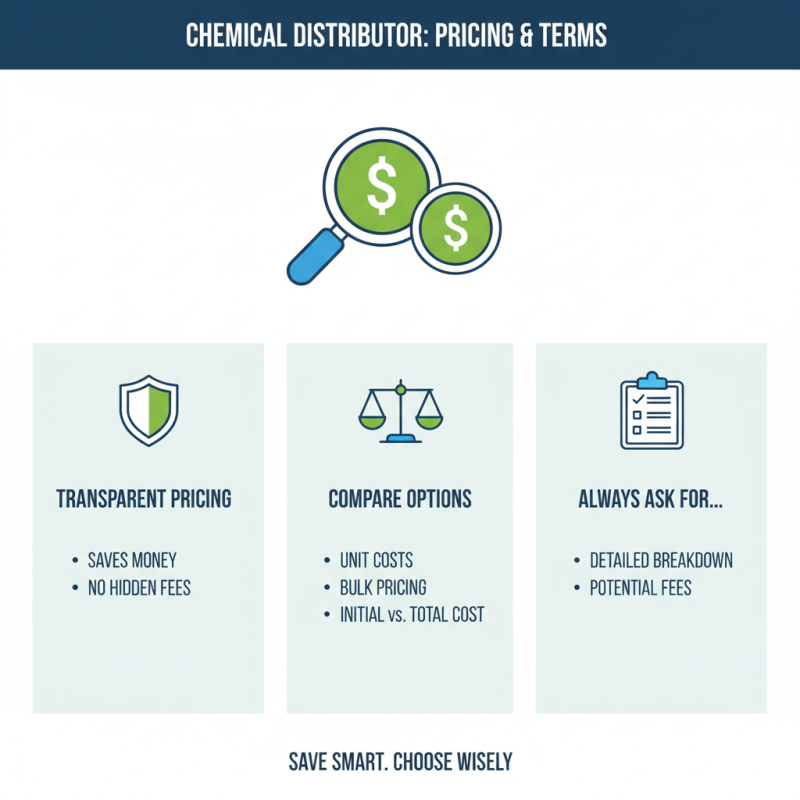
When selecting a chemical distributor, pricing structures and terms of service are crucial. A transparent pricing model can save you money. Consider both unit costs and bulk pricing options. Sometimes, a lower initial price may come with hidden fees later. Always ask for a detailed breakdown. This can reveal potential costs you might overlook.
Terms of service vary significantly between distributors. Some may offer flexible terms, while others have strict restrictions. For example, check their return policy on unsatisfactory products. A transparent, fair return policy can be a sign of a reliable partner. Additionally, ensure they have clear delivery terms and timelines. Unexpected delays can disrupt your operations.
Look for distributors who offer customization in their services. This flexibility can be beneficial for unique business needs. However, be cautious of those who promise rapid responses but fail to deliver. Trust and reliability should be your priority. Take the time to evaluate their communication style as well; this can greatly impact your ongoing relationship.
Understanding Customer Support and After-Sales Services
When selecting a chemical distributor,
customer support matters significantly. A distributor with strong support can save you time and frustration.
You want someone who responds quickly to inquiries. Delays in communication can lead to costly production halts.
A reliable distributor should offer various ways to reach them. Consider phone support,
email, and chat options. Each channel should be staffed by knowledgeable representatives.
After-sales service plays a crucial role as well. The distributor should provide guidance on product usage
and safety. They should also assist with any issues that arise after the initial sale. Look for feedback from other customers.
Their experiences can reveal how effectively a distributor resolves problems. Be cautious of distributors that lack a transparent return policy.
An unclear return process can complicate matters further down the line.
Finally, evaluate how proactive the distributor is.
Do they follow up with you after a purchase? Are they willing to offer solutions before issues occur?
Some distributors may fall short here. They might respond well initially but fail to provide ongoing support.
Finding a partner for the long term involves assessing these factors carefully.
Success hinges on both products and the support that comes with them.