Top Tips for Choosing the Right Solvent Colour for Your Needs?
Choosing the right solvent colour can significantly impact your project. It’s not just about aesthetics; it's about functionality and application. Whether you are in manufacturing, art, or various industries, understanding solvent colours is crucial.
Different solvents perform uniquely under various conditions. Some might be more suited for specific materials, while others may fade or alter over time. You may find yourself questioning whether a certain solvent colour truly fits your needs. This reflects the importance of thorough research and expert guidance.
Incorporating the right solvent colour can enhance the effectiveness of your work. It’s essential to consider the intended use, compatibility, and long-term effects. Reflecting on past choices can also inform better decision-making. Ultimately, a well-informed selection will lead to superior results.
Understanding the Importance of Solvent Colour Selection
When selecting a solvent, color is a crucial factor. The right color can affect the appearance and usability of your finished product. Many users overlook this aspect, leading to potential issues in applications. It is essential to understand the importance of choosing the right solvent color.
Different colors can signify various properties. For example, a transparent solvent may indicate purity. Conversely, darker colors might suggest the presence of additives or impurities. Users must be aware of how these colors can impact the final outcome. Testing small samples before a full-scale application can help avoid costly mistakes. It encourages critical thinking about the final product's appearance and functionality.
Additionally, the compatibility of solvent color with materials plays a vital role. Color can influence surface adhesion, drying time, and overall performance. However, selecting a solvent merely based on color might lead to unforeseen issues. Users often overlook how environmental factors can alter perception. Reflection and awareness are necessary for making informed choices. Each decision should be grounded in practical understanding and experience.
Factors to Consider When Choosing a Solvent Colour
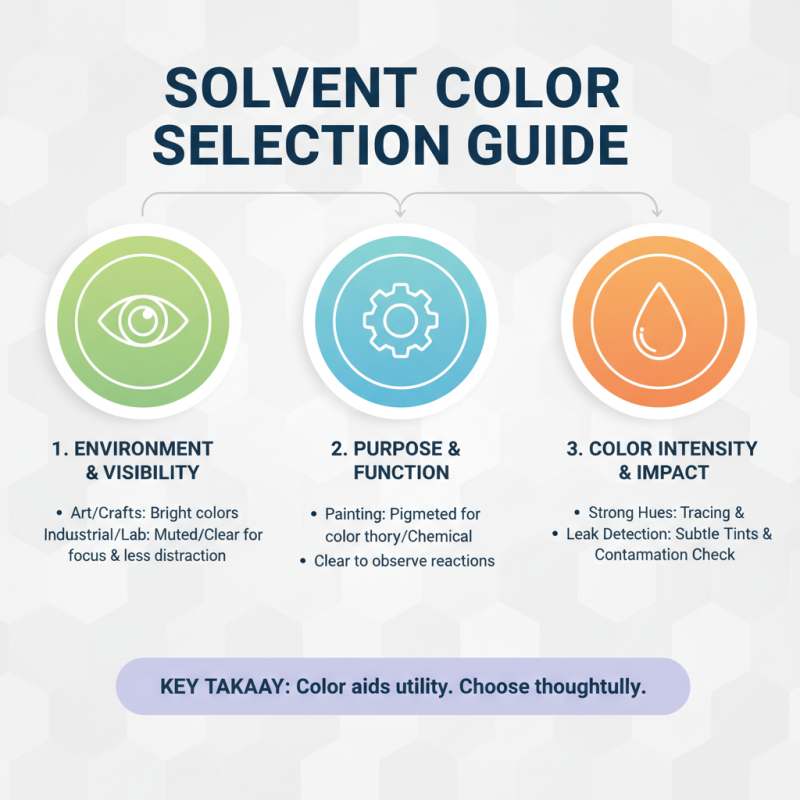
Choosing the right solvent colour is crucial for various applications, from art to industrial use. Start by assessing the environment in which the solvent will be used. For instance, brighter colours might be helpful for visibility in painting, while more muted tones are often preferred in industrial settings. Consider the purpose carefully, as colour intensity can impact functionality.
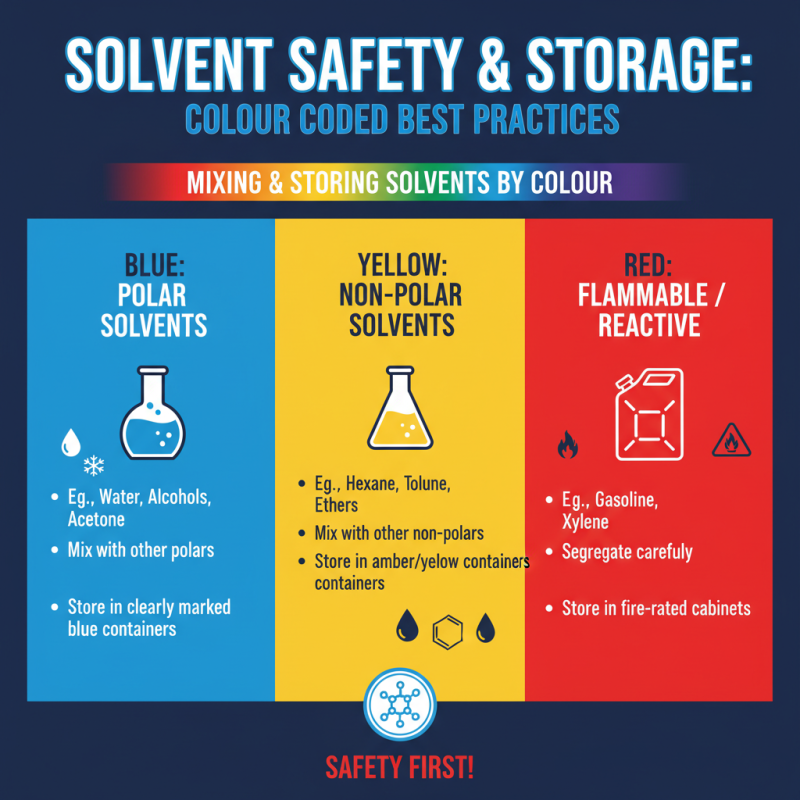
Another important factor is the compatibility of the solvent colour with other materials. Some colours may react negatively with certain chemicals. This could lead to unwanted results or even damage. Conduct small tests before fully committing to any colour. It may save you time and resources in the long run.
Don't forget to evaluate the shelf life of the colour. Some solvent colours fade over time, which may not meet your needs. If longevity is a priority, speak to experts or refer to material safety data sheets. Inconsistent results can also occur, requiring patience and a willingness to adapt. Being aware of these challenges will help refine your choice significantly.
Common Applications and Their Colour Requirements
When selecting a solvent color, it’s vital to consider its application. Different industries have unique color requirements that affect performance and aesthetics. For example, in the painting and coatings sector, pigments must often meet specific regulatory standards. Research indicates that 70% of coatings require a specific color for compliance and consumer expectations.
In the printing industry, color fidelity is crucial. According to a report by the National Association for Printing, about 80% of brands prioritize color accuracy in their materials. They need solvents that ensure vibrant prints without compromising quality. Additionally, many solvent types, like acetone or ethanol, can differ significantly in their pigmentation and fade resistance.
Another area to reflect on is the environmental impact. Many solvent colors can have volatile organic compounds (VOCs). The EPA states that approximately 45% of solvent-based products contain VOCs that may harm air quality. Choosing a low-VOC option can align with sustainability goals while achieving the desired color richness. However, balancing color choice and environmental considerations can be challenging. It's essential to weigh aesthetic needs against regulatory compliance and sustainability goals.
Testing and Evaluating Solvent Colours for Compatibility
Choosing the right solvent colour requires careful testing and evaluation. Compatibility is crucial. Inadequate compatibility can lead to poor performance or unexpected reactions. Studies indicate that solvent colour affects visibility and usability. For example, a report from the Chemical Engineering Journal highlights that mismatched colours can alter chemical properties, impacting project outcomes.
When testing solvent colours, consider factors like temperature and pressure. These elements influence colour stability and interaction with various materials. For instance, research shows that some colours fade at higher temperatures, potentially compromising effectiveness. Furthermore, it’s essential to conduct small-scale experiments. This approach helps pinpoint any compatibility issues early in the process.
One method includes comparing colour intensity across different solvents. This can reveal inconsistencies in performance. Additionally, user feedback can be invaluable. Engaging with professionals in the field provides insights that lab tests may overlook. Keep in mind that subjective impressions of colour can vary widely, adding another layer of complexity to the selection process.