Top 10 Specialty Chemicals Driving Innovations in Various Industries
The world of specialty chemicals is experiencing a transformative era, where innovation is at the forefront of various industries, paving the way for advancements across multiple sectors. Specialty chemicals, characterized by their unique properties and specific applications, play a crucial role in facilitating breakthroughs in areas such as pharmaceuticals, agriculture, materials science, and consumer products. As businesses seek to enhance performance and efficiency, the demand for these tailored chemical solutions continues to rise, driving sustainable practices and fostering new technological developments.
In this landscape, the top specialty chemicals are not only improving existing products but are also enabling the creation of entirely new solutions that address complex challenges faced by modern society. From additives that enhance product performance to agents that promote environmental sustainability, these chemicals are central to innovation. As we explore the ten leading specialty chemicals shaping today's industries, we will examine their influence on driving change and how they contribute to a more sustainable future. Understanding the implications of these developments will highlight the importance of specialty chemicals in our daily lives and their power to redefine industry standards.

The Role of Specialty Chemicals in Modern Industry Innovations
Specialty chemicals play a crucial role in driving innovations across various industries, serving as key enablers for advancements in technology, sustainability, and product performance. These chemicals, characterized by their unique formulations and specific applications, often cater to niche markets and specialized requirements. Their versatility allows them to enhance processes in industries such as pharmaceuticals, agriculture, automotive, and electronics, leading to increased efficiency and reduced environmental impact. For instance, specialty chemicals can improve the efficacy of agricultural pesticides, resulting in higher crop yields while minimizing ecological footprints.
In modern industry, the integration of specialty chemicals fosters creativity and competitiveness. They facilitate the development of new materials and processes that meet the evolving demands of consumers and regulators alike. Whether it’s through the creation of more efficient catalysts or the formulation of advanced polymers, these chemicals are at the forefront of innovation. As industries strive for sustainable solutions, specialty chemicals are also evolving to support eco-friendly practices, such as biodegradable materials and greener manufacturing processes, reflecting the growing commitment to environmental stewardship. The collaboration between chemical manufacturers and end-users further accelerates innovation, ensuring that specialty chemicals continue to meet the dynamic needs of various sectors.
Key Industries Benefiting from Specialty Chemical Advancements
The specialty chemicals industry plays a critical role in driving innovation across various sectors, including agriculture, pharmaceuticals, and automotive manufacturing. According to a recent report by MarketsandMarkets, the global specialty chemicals market is projected to reach $1.0 trillion by 2025, reflecting a CAGR of 4.6% from 2020 to 2025. This growth is primarily fueled by advancements in chemical processes and applications, allowing industries to achieve higher efficiencies and improved product performance.
In agriculture, specialty chemicals such as biopesticides and fertilizers have revolutionized crop protection and yield optimization. The global biopesticides market alone is expected to grow from
$4.7 billion in 2020 to $7.6 billion by 2025, driven by increasing demand for sustainable farming practices. Another key area benefiting from specialty chemicals is the pharmaceutical industry, which relies on these compounds for drug formulation and development. The global pharmaceutical chemicals market is anticipated to surpass $300 billion by 2024, emphasizing the importance of specialty chemicals in producing effective therapeutic agents.
Furthermore, the automotive industry is witnessing a surge in the demand for specialty chemicals that enhance vehicle performance, reduce emissions, and improve safety. Advanced coatings and additives, for example, are playing a significant role in developing lighter, more fuel-efficient vehicles. The global automotive chemicals market is projected to reach $100 billion by 2025, with specialty chemicals being pivotal in achieving compliance with stringent environmental regulations and consumer expectations for sustainability. The continued innovation in these areas underscores the vital role that specialty chemicals play across multiple industries.
Top 10 Specialty Chemicals Revolutionizing Production Processes
Specialty chemicals are at the forefront of transforming production processes across a myriad of industries, fostering enhanced efficiency and sustainability. One prominent example lies in the use of biobased solvents, which offer a greener alternative to traditional petrochemical solvents. These biobased options not only reduce the carbon footprint but also improve worker safety and health by minimizing exposure to harmful volatile organic compounds (VOCs). This shift not only boosts company compliance with environmental regulations but also appeals to increasingly eco-conscious consumers.
Another significant advancement is the development of high-performance polymers that have revolutionized materials used in manufacturing. These polymers exhibit remarkable strength, thermal stability, and chemical resistance, enabling their use in a range of applications, from automotive components to electronics. By incorporating these advanced materials, manufacturers can streamline their production processes, reduce waste, and elevate the overall performance of their products. As industries strive for more sustainable and efficient operations, specialty chemicals continue to play a pivotal role in achieving these goals, driving innovation at every level of production.
Top 10 Specialty Chemicals Driving Innovations in Various Industries
| Chemical |
Application |
Industry |
Impact on Production |
| Silicone Emulsions |
Surface Enhancements |
Textiles |
Improves durability and water resistance |
| Biodegradable Plastics |
Packaging Solutions |
Consumer Goods |
Reduces environmental impact |
| Water Soluble Polymers |
Thickening Agents |
Pharmaceuticals |
Enhances drug formulation efficiency |
| Flame Retardants |
Safety Enhancements |
Construction |
Increases material safety standards |
| Advanced Adhesives |
Bonding Solutions |
Automotive |
Enhances assembly efficiency |
| Catalysts |
Chemical Reactions |
Petrochemicals |
Increases yield and lowers costs |
| Surfactants |
Cleaning Agents |
Household Products |
Improves cleaning efficiency |
| Specialty Coatings |
Protective Layers |
Electronics |
Enhances durability and performance |
| Nano Materials |
Enhancements |
Medical Device |
Improves functionality and integration |
| Biocides |
Microbial Control |
Agriculture |
Enhances crop protection |
Impact of Specialty Chemicals on Sustainability and Environmental Practices
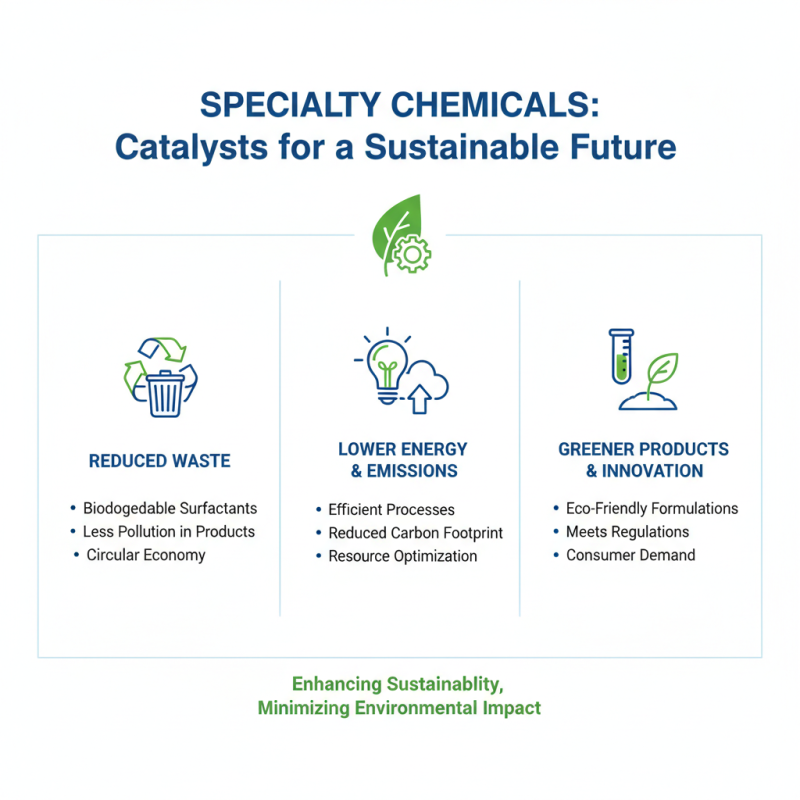
Specialty chemicals play a critical role in enhancing sustainability and promoting environmentally friendly practices across various industries. These chemicals contribute to reducing waste, lowering energy consumption, and minimizing the carbon footprint of manufacturing processes. For instance, biodegradable surfactants are increasingly replacing conventional options in cleaning products and personal care items. This shift not only reduces pollution but also aligns with consumers' growing demand for sustainable products. By incorporating specialty chemicals, industries can innovate their product formulations while adhering to stricter environmental regulations.
Furthermore, specialty chemicals facilitate the development of advanced materials that improve energy efficiency and resource utilization. The emergence of bioplastics, derived from renewable materials, serves as a notable example of how these chemicals enable a circular economy. By providing alternatives to traditional plastics, specialty chemicals foster a more sustainable approach to packaging and manufacturing. Additionally, advancements in specialty chemical formulations enable the production of coatings and adhesives that are both high-performing and environmentally friendly. This not only enhances product longevity but also reduces the environmental impact associated with disposal. As industries increasingly prioritize sustainability, specialty chemicals emerge as essential enablers of innovative and eco-conscious practices.
Future Trends in Specialty Chemicals and Their Market Influence
The specialty chemicals industry is poised for transformative growth, heavily influencing various sectors such as automotive, pharmaceuticals, and electronics. According to a recent report by MarketsandMarkets, the global specialty chemicals market is projected to reach USD 1 trillion by 2025, growing at a CAGR of 5.3% from 2020 to 2025. This climb is bolstered by rising demand for high-performance materials and eco-friendly solutions. As industries increasingly focus on sustainability, the demand for bio-based chemicals is also on the rise, indicating a shift toward greener alternatives.
One key trend is the development of advanced materials, particularly in the field of composites. The increasing requirement for lightweight materials in automotive manufacturing has spurred innovations in resin and composite production. Moreover, the rise of electrical vehicles is accelerating the need for specialized coatings and additives that enhance functionality and performance. Reports indicate that the global composites market is expected to grow substantially, with specialty chemicals playing a pivotal role in this evolution.
Tips: Embracing the advancements in specialty chemicals can be a game-changer for businesses aiming for innovation. Staying updated on market trends can guide strategic investments. Collaborating with chemical suppliers who prioritize sustainability will not only allow for compliance with evolving regulations but can also enhance brand image among environmentally conscious consumers.
Top 10 Specialty Chemicals Driving Innovations