Blog
Who Are the Top Bulk Chemicals Suppliers in China?
Choosing a bulk chemicals supplier in China takes more than comparing prices. Buyers must consider product consistency, production capacity, delivery performance, and clear communication. A low quotation can look attractive, but it means little if specifications shift between batches. Details matter.
This guide explores how to assess leading suppliers and what “top” should mean for different purchasing needs. A manufacturer suited to a large, steady order may not fit a buyer seeking smaller volumes or flexible packaging. Check product specifications, safety data sheets, quality certifications, and export experience. Confirm that documents match the exact product and facility, not merely the company’s general profile. Ask about batch testing, packaging options, lead times, and how the supplier handles delays or quality concerns.
Look beyond polished websites and broad claims. Request current documentation and compare responses against your own technical requirements. Where practical, arrange a sample evaluation before committing to a substantial order. Rankings can be useful starting points, but they are not proof of suitability. Information may change, and public profiles do not reveal every operational detail. That is worth remembering. A careful review helps buyers identify credible Chinese suppliers while reducing avoidable sourcing risks.
What Bulk Chemicals Include and How China’s Supplier Market Is Structured
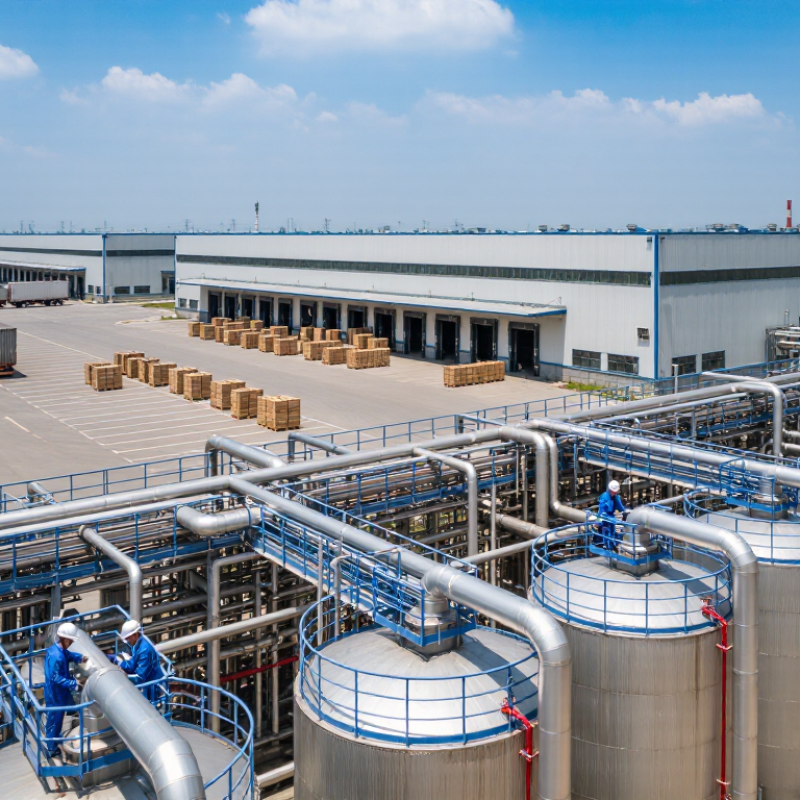
Bulk chemicals are high-volume materials made for repeated industrial use, rather than small, specialized batches. They include basic acids and alkalis, industrial solvents, mineral salts, and polymer feedstocks. Buyers usually specify grade, concentration, purity, and delivery form. A difference of just one percentage point can affect a production recipe.
China’s supplier market has several layers. Large producers make standardized materials at scale, often near industrial parks, ports, or major feedstock sources. Regional distributors hold local stock and arrange smaller orders, while trading firms connect buyers with multiple factories. Some suppliers also coordinate tank trucks, drums, or bulk vessel shipments. The channel matters. A factory-direct quote may not include storage, transport, or export documentation.
For a real comparison, check the product specification, recent batch analysis, safety data, and packaging details. Confirm whether the quoted grade matches your process, not just the product name. Ask how the supplier handles batch variation and delayed deliveries. Small checks help. A low price can look attractive, yet freight or inconsistent quality may erase the savings. Supplier listings can be incomplete, and not every intermediary explains its role clearly. That deserves a second look.
Criteria for Identifying Leading Bulk Chemical Suppliers
China’s chemical market is vast, but size alone does not prove reliability. The China Petroleum and Chemical Industry Federation reported sector revenue of about RMB 15.95 trillion in 2023, while profits fell 20.7%. That contrast matters: buyers should examine a supplier’s financial resilience, not just its quoted price or production capacity.
Review recent audited financial statements and verify actual output against delivery records. Request batch-specific certificates of analysis, clearly stated test methods, and examples of how out-of-specification material is handled. For bulk shipments, check tank or packaging condition, loading procedures, and whether shipment documents match the product and batch.
Ask for on-time delivery rates across several months, not one polished reference. A capable supplier should explain its backup inventory and how it communicates delays. No scorecard is perfect. I would also compare technical support and responsiveness after the first order; those details are easy to overlook.
China’s market scale, reflected in the federation’s 2023 figures, makes consistent quality checks essential when comparing suppliers with similar prices.
Major State-Owned Chemical Producers in China
Major state-owned chemical producers are central to China’s bulk chemicals supply. Their scale often supports integrated operations, linking feedstocks, large production units, storage, and transport. This can help buyers secure consistent volumes of basic materials such as ammonia, methanol, and industrial polymers. Cefic’s 2024 Facts & Figures estimates that China generated about 42% of global chemical sales in 2023. That figure shows the market’s weight, but it does not guarantee that every supplier or site offers the same reliability. Scale matters. So does execution.
For procurement teams, compare plant capacity with actual available volumes, delivery routes, and product specifications. Ask for recent quality documents and clarify how the supplier handles outages or maintenance. Public ownership may bring access to extensive infrastructure, yet approval processes can be slower than expected. This is worth checking early. A supplier’s national footprint alone is not a substitute for site-level due diligence.
Tips: Request sample certificates of analysis, confirm packaging and loading details, and agree on a clear delivery schedule. If possible, assess service at the specific plant—not only at group level. Small differences in lead time can disrupt a production line.
Who Are the Top Bulk Chemicals Suppliers in China? - Major State-Owned Chemical Producers in China
The table compares major state-owned supplier categories and their typical bulk-chemical portfolios. Company and brand names are omitted; categories are not ranked, and individual product availability varies by producer and site.
| Supplier category | Typical bulk products | Common production routes | Typical buyer industries | Procurement checks |
|---|---|---|---|---|
| Integrated petroleum and petrochemical groups | Ethylene, propylene, polyethylene, polypropylene, benzene, and other aromatics | Crude-oil refining followed by steam cracking, catalytic reforming, and downstream polymerization | Plastics, packaging, textiles, construction materials, and chemical manufacturing | Grade and specification, site of origin, allocation, delivery terms, and product certificates |
| Offshore oil and gas-linked chemical producers | Refined products and selected petrochemical feedstocks and intermediates | Oil and gas processing integrated with refining and downstream chemical operations | Refining, plastics, synthetic materials, and industrial chemical users | Product-specific availability, loading facilities, transport mode, and continuity of supply |
| Coal-chemical producers, including state-owned operators | Methanol, ammonia, urea, and selected coal-to-chemical intermediates | Coal gasification and synthesis-gas processing; product slate depends on the facility | Fertilizer, resins, fuels, and industrial chemical manufacturing | Feedstock and energy exposure, emissions compliance, product grade, and inland freight costs |
| Fertilizer and nitrogen-chemical producers | Ammonia, urea, and other nitrogen fertilizers | Ammonia synthesis using natural gas or coal-derived synthesis gas; urea production from ammonia and carbon dioxide | Agriculture, fertilizer blending, and chemical manufacturing | Nitrogen content, moisture and impurity limits, seasonal availability, and storage requirements |
| Chlor-alkali and inorganic-chemical producers | Caustic soda, chlorine, and related inorganic products | Chlor-alkali electrolysis; chlorine is commonly consumed or processed at or near the production site | Pulp and paper, alumina, water treatment, textiles, and chemical processing | Concentration, packaging or tank requirements, hazardous-goods handling, and delivery distance |
| Large-scale soda-ash producers | Soda ash (sodium carbonate), in dense or light grades | Solvay or natural-alkali processing, depending on the plant and its feedstocks | Glass, detergents, chemicals, and metallurgical applications | Grade and bulk density, impurity limits, packaging, and transport economics |
Note: State ownership and product portfolios can differ across subsidiaries and production sites. Confirm current specifications, operating status, export eligibility, and supply terms directly during qualification.
Prominent Private and Specialized Chemical Suppliers
China’s private and specialized chemical suppliers often serve needs that large integrated producers overlook: narrower product grades, flexible shipment sizes, and regional delivery. The China Petroleum and Chemical Industry Federation reported 15.95 trillion yuan in operating revenue for the petroleum and chemical sector in 2023. This figure describes the broad sector, not private suppliers alone, but it shows the scale of the supply network they operate within.
Their value often appears in practical details. A buyer may need consistent moisture levels, a specific particle size, or delivery timed to a plant’s storage capacity. Specialized suppliers can be more responsive here, though capacity and quality systems vary widely. That matters. Before placing large orders, buyers should review recent inspection records, batch traceability, production capacity, and contingency plans. Ask for representative certificates and clarify how rejected loads are handled.
CPCIF’s 2023 industry review also recorded total sector profits of 873.4 billion yuan, amid uneven market conditions. These aggregate figures do not guarantee supplier reliability. I would treat them as context, not a scorecard—a distinction that is easy to miss. Private suppliers may offer close technical support, but smaller teams can face staffing or logistics constraints. Verify delivery performance over several shipments, not just a sample.
How Buyers Compare Suppliers, Products, and Compliance Standards
China’s scale makes supplier selection more complex than comparing quoted prices. Cefic’s 2023 Facts & Figures reports that China accounted for 44.6% of global chemical sales in 2022. That measures market share, not product quality. Ask for recent certificates of analysis and compare purity, moisture, and impurity limits against your own specification. Check whether results match across separate production batches. A low price means little if material arrives with inconsistent granule size or damaged bags. Not enough.
Compliance checks should cover the product and its journey. Confirm the applicable Chinese GB standards and destination-market requirements, then review safety data sheets, labels, and batch traceability. Ask how the supplier handles deviations and keeps records; a polished audit file is not proof of reliable daily production. The IEA’s 2018 Future of Petrochemicals report projects that petrochemicals will drive more than one-third of oil-demand growth through 2030, underscoring the sector’s exposure to feedstock and energy costs. Request a clear explanation of price-adjustment terms and delivery lead times. I would still test a sample and verify documents independently; that adds work, but prevents assumptions from becoming procurement mistakes.
Related Posts
-
What Are All the Types of Chemicals Explained?
-
Why Is the US Chemical Industry Important for Global Buyers?
-
2026 How to Source All Chem Products Effectively?
-

How to Find Reliable Chemical Producers in 2026?
-

Top 10 Specialty Chemicals Transforming Industries Today?
-
Why Are Chemical Plants Essential for Global Supply Chains?