Top Types of Fountains Fireworks for Global Buyers
Choosing the right Fountains Fireworks begins with understanding how each type performs, looks, and fits local requirements. Global buyers often compare cone fountains, cylindrical fountains, multicolor fountains, crackling fountains, and low-noise varieties. Each option creates a different scene. Some produce silver sparks like a small waterfall. Others build layered colors, soft whistles, or bright golden showers.
Dr. John A. Conkling, a recognized fireworks chemist and author, describes fireworks as “a combination of chemistry and art.” This view matters when buyers assess product quality. A beautiful effect also needs consistent performance, secure packaging, clear labeling, and responsible supply-chain documentation. Nothing should be assumed. Product specifications can vary between factories, seasons, and markets. Even a familiar fountain may require different approvals in another country.
This guide examines the top Fountains Fireworks categories for international buyers. It considers visual effect, duration, packaging, noise level, and retail appeal. It also highlights practical purchasing questions, including certification, storage guidance, age restrictions, transport rules, and import responsibilities. These details may seem less exciting than glittering sparks. They are not.
Good sourcing is careful sourcing. Buyers should work with established manufacturers and verify compliance with the destination market’s current laws. Local authorities and qualified safety professionals remain the final reference. No product should be selected only from a photograph. Images can exaggerate height, color, and intensity. A thoughtful buyer checks technical documents, samples where permitted, and supplier history before making a decision.
Fountain Fireworks: Definition and Basic Working Principles
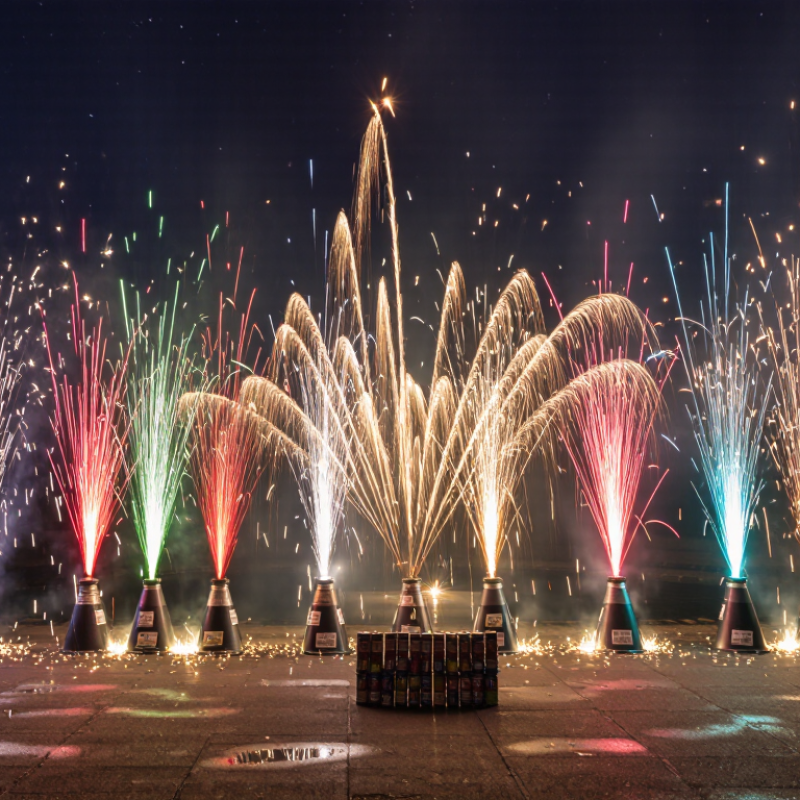
A fountain firework is a ground-based pyrotechnic device that produces a steady spray of sparks, light, and colored effects. Unlike aerial fireworks, it normally remains on the ground and directs energy upward through a controlled opening. Its basic principle is simple: an approved composition burns inside a stable casing, generating hot gases and glowing particles. Pressure pushes these particles through the nozzle, creating the visible fountain.
The effect depends on several factors, including nozzle design, composition quality, moisture control, and burn duration. Silver sparks usually come from metallic particles, while color effects depend on regulated chemical compounds. Real output is rarely perfectly uniform. Wind, humidity, and uneven placement can change the spray height.
The U.S. Consumer Product Safety Commission reported an estimated 9,700 fireworks-related injuries in 2023. This figure covers all consumer fireworks, not fountains alone, but it shows why product testing and clear instructions matter. Buyers should request laboratory documentation, batch records, and compliance evidence for the destination market.
Tips: Keep fountains on a flat, non-combustible surface. Check the safety distance, ignition instructions, and local approval requirements. Avoid damaged or damp units. A small mistake can affect stability. For global purchasing, confirm transport classification and labeling before shipment. CPSC reporting is useful, but it is not a substitute for local regulatory review.
Main Types of Fountain Fireworks and Their Visual Effects
Top Types of Fountains Fireworks for Global Buyers
Main Types of Fountain Fireworks and Their Visual Effects
Fountain fireworks create effects from the ground, without aerial bursts. Gerb fountains produce narrow, tall plumes with steady silver or gold sparks. Cone fountains spread wider, creating a fan-shaped spray that suits entrances and small stages. Cylinder fountains often deliver denser streams, layered colors, and stronger crackling effects. Multi-effect fountains can shift from colored pearls to silver rain within one performance.
Visual quality depends on height, spread, burn time, color contrast, and stability. A short fountain may look bright but finish too quickly. A slower model can create better pacing for event photography. Looks can mislead. Buyers should compare tested specifications, not only package images. For large-volume procurement, request batch records, laboratory test certificates, ingredient declarations, and local compliance documents from authorized suppliers.
Safety data deserves equal attention. The U.S. Consumer Product Safety Commission estimated 9,700 fireworks-related injuries and eight deaths in its 2023 Fireworks Annual Report. The National Fire Protection Association reported an average of 19,500 fireworks-related fires annually from 2014 to 2018. These figures show why placement, crowd distance, stable surfaces, and trained supervision matter. Product labels also vary between markets, so translation alone is not enough. A careful buyer checks the permitted category, noise limits, transport rules, and venue requirements before ordering.
Safety Standards and Regulatory Requirements for Global Buyers
Top Types of Fountains Fireworks for Global Buyers
Safety Standards and Regulatory Requirements for Global Buyers
Fountain fireworks produce a steady spray of sparks, but their risks remain significant. Global buyers should verify local approval before discussing price or shipment. Requirements may cover product testing, operator qualifications, storage limits, transport documents, and public-use permits. Rules differ between countries, and sometimes between cities. A certificate from one market may not be accepted elsewhere. Buyers should request current test reports, safety data sheets, batch numbers, and clear usage labels. These records support traceability when a shipment or inspection raises questions.
A professional supplier should explain the product classification, packaging method, ignition instructions, and minimum safety distance. Labels should be readable in the destination market’s language. Packaging must resist moisture and show handling warnings. Never rely on online photographs alone. A certificate can look reassuring, yet it may not cover the exact model or batch. That detail is easy to miss. Buyers should also confirm whether import approval is needed before payment, because customs delays can create unsafe storage pressure. Independent testing is valuable when documents appear incomplete or inconsistent.
Tips: Ask the local authority for written requirements. Match every document to the exact product code. Check seals, labels, and packaging upon arrival. Store fountains in a dry, secure, authorized location. Keep inspection records. If anything seems unclear, pause the purchase and seek advice from a qualified pyrotechnics professional.
Top Types of Fountain Fireworks: Safety Distances by EU Category
EN 15947-5 uses category-based safety distances for consumer fireworks. Fountain products must be classified, labelled, and used according to the applicable national rules. F4 fireworks are for professional use and require a competent operator and an approved safety plan.
Benchmark data: EN 15947-5 minimum safety-distance framework — F1: 1 m, F2: 8 m, F3: 15 m. F4 has no universal consumer distance and is controlled by professional risk assessment and local permits. Always verify the destination country's requirements, product label, import rules, and emergency regulations.
How to Select Reliable Fountain Fireworks for Different Markets
For global buyers, selecting reliable fountain fireworks begins with the destination market, not the product photo. Each market may require different safety labels, testing documents, packaging rules, and import approvals. Confirm these requirements with local authorities and qualified compliance professionals before placing an order. In practical buyer evaluations, batch traceability is essential. The supplier should provide production records, inspection results, and clear instructions in the required language. Missing paperwork is a warning sign.
Performance also needs careful review. Request samples from the same batch planned for shipment, then assess ignition consistency, fountain height, burn duration, residue, and stability on a flat surface. A bright sample can still mislead. Watch several units, not just one. Ask whether weather-resistant packaging suits humid coastal markets or dry inland storage. Reliable suppliers explain limitations instead of promising identical results everywhere.
Market fit includes handling and after-sales support. Check carton strength, inner protection, hazard communication, and storage guidance. Confirm that the product is intended for trained adult users and approved venues only. Independent laboratory testing adds credibility, but documents should match the exact product and batch. Be cautious with unusually low prices; savings may reflect weaker packaging or incomplete testing. My own purchasing reviews have sometimes focused too much on visual effects. That was a mistake. Consistent documentation and safe logistics matter more than a spectacular first impression.

