Top 10 Specialty Chemicals Transforming Industries Today?
Specialty chemicals are crucial to modern industries. They play a significant role in sectors like automotive, pharmaceuticals, and agriculture. According to a recent report by Markets and Markets, the global specialty chemicals market was valued at over $800 billion in 2022. It is expected to grow at a compound annual growth rate (CAGR) of 5.4% through 2027.
These chemicals offer tailored solutions and enhance product performance. For instance, advanced coatings increase durability in various applications. In food industries, specialty chemicals improve flavor and preservation. Despite their benefits, environmental concerns arise with their production and use. Companies face pressure to adopt sustainable practices. This poses a challenge for growth and innovation.
Understanding the impact of specialty chemicals is vital. As industries evolve, so do the demands for specific chemical applications. Addressing these needs requires careful consideration. Balancing innovation, safety, and sustainability can be complex. The future of specialty chemicals hinges on these critical factors.

Emerging Trends in the Specialty Chemicals Market
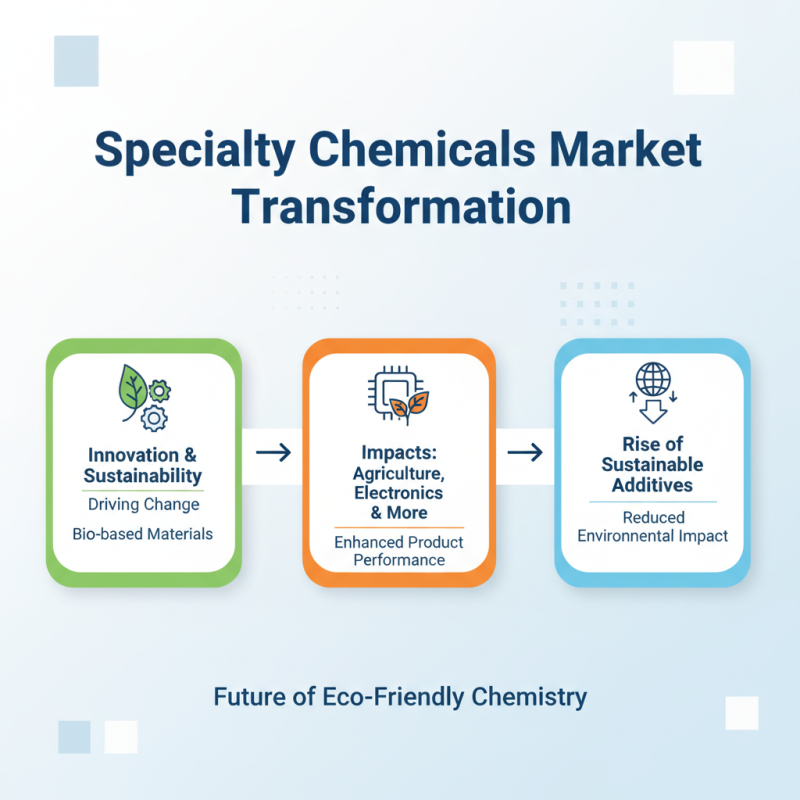
The specialty chemicals market is undergoing significant transformation. Innovations are shaping various industries, from agriculture to electronics. One prominent trend is the rise of sustainable additives. These chemicals enhance product performance while reducing environmental impact. Companies are exploring bio-based materials to meet eco-friendly demands.
Another trend is the development of smart materials. These specialty chemicals change properties in response to external stimuli. For instance, temperature-sensitive coatings are revolutionizing several sectors, including automotive and construction. Yet, challenges remain in scalability and cost-effectiveness, limiting broader adoption.
Regulatory pressures also play a pivotal role. Manufacturers face increased scrutiny regarding safety and environmental impact. This makes the need for transparent sourcing and production practices essential. The evolving landscape suggests a complex path forward. As industries adopt new technologies, reflection on ethical implications becomes crucial. Balancing innovation with responsibility may define the future of specialty chemicals.
Key Applications of Specialty Chemicals in Various Industries
Specialty chemicals play a crucial role in various industries. They enhance product performance and improve efficiencies. One notable application is in agriculture. Specialty fertilizers boost crop yields. They provide essential nutrients more effectively than conventional options. This leads to better food production in an ever-growing world.
In the automotive sector, specialty chemicals are used in paints and coatings. These materials enhance durability and longevity. They protect vehicles from environmental damage. Innovations in polymer additives have also led to lighter materials. This improves fuel efficiency and reduces emissions.
The electronics industry benefits from specialty chemicals in semiconductor manufacturing. Precise chemical formulations ensure high performance in devices. However, this reliance raises concerns about sustainability. As industries evolve, the challenge remains to balance performance with environmental impact.
Innovative Technologies Driving Specialty Chemical Advancements
Innovative technologies are reshaping the landscape of specialty chemicals. Advanced materials are emerging daily. These materials enhance performance in various industries, from automotive to healthcare. One significant trend is the rise of bio-based chemicals. They are derived from renewable resources and reduce environmental impact. Such innovations can create more sustainable products but also raise questions about scalability and production costs.
Nanotechnology holds immense potential. By manipulating materials at the molecular level, manufacturers can improve the properties of chemicals. This leads to lighter, stronger, and more efficient products. However, this technology can be expensive and requires careful monitoring for safety. Industry professionals must address these challenges while exploring new applications.
Artificial Intelligence is another game-changer. It streamlines the research and development process. AI can analyze vast amounts of data quickly, identifying patterns that humans might miss. While this accelerates innovation, reliance on AI can lead to oversight in critical areas. Balancing technology with human expertise will be essential for future advancements.
Impact of Sustainable Practices on Specialty Chemical Production
Sustainable practices are reshaping the production of specialty chemicals. This shift is not just about eco-friendliness; it's influenced by regulatory pressures and consumer demands. Companies are investing in green technologies. They aim to reduce their carbon footprints. However, the transition is not seamless.
The utilization of renewable resources is becoming more common. For example, bio-based feedstocks replace fossil fuels in some chemical processes. This approach reduces pollution. Yet, there are challenges. Sourcing sustainable materials can be difficult and sometimes costly. Fluctuations in supply can disrupt production schedules.
Moreover, recycling initiatives are gaining traction. They focus on reusing chemical products. However, efficacy and quality concerns linger. Many companies are grappling with how to standardize recycled materials. While the move towards sustainability is commendable, it requires ongoing evaluation. Companies must balance innovation with practical realities.
Top 10 Specialty Chemicals Transforming Industries Today
| Rank |
Chemical Type |
Industry Impacted |
Sustainable Practice |
Key Benefit |
| 1 |
Biodegradable Polymers |
Packaging |
Reduced Plastic Waste |
Environmentally Friendly |
| 2 |
Green Solvents |
Coatings & Paints |
Lower VOC Emissions |
Improved Air Quality |
| 3 |
Renewable Surfactants |
Personal Care |
Sourced from Renewable Feedstocks |
Sustainable Ingredient Choices |
| 4 |
Biocatalysts |
Pharmaceuticals |
Energy Efficient Processes |
Reduced Energy Consumption |
| 5 |
Bio-Based Chemicals |
Agriculture |
Fossil Fuel Alternatives |
Lower Carbon Footprint |
| 6 |
Recyclable Materials |
Construction |
Waste Reduction |
Sustainability in Building |
| 7 |
Natural Fragrances |
Food & Beverage |
Ethically Sourced Ingredients |
Consumer Preference Alignment |
| 8 |
Conductive Polymers |
Electronics |
Reduced Resource Use |
Enhanced Device Efficiency |
| 9 |
Smart Coatings |
Automotive |
Self-Healing Properties |
Increased Durability |
| 10 |
Water-Soluble Polymers |
Textiles |
Eco-Friendly Dyes |
Minimal Chemical Waste |
Future Outlook for Specialty Chemicals and Industry Transformations
The specialty chemicals sector is rapidly evolving. Innovations are reshaping industries from agriculture to electronics. These chemicals help enhance product performance and reduce environmental impact. Many companies are investing heavily in research and development. Yet, the industry faces challenges, including regulatory hurdles and changing market demands.
Sustainability is a key focus for future growth. Many businesses are pursuing eco-friendly alternatives. However, the transition isn’t straightforward. Research shows that developing greener chemicals can be time-consuming. Companies often struggle to balance cost with sustainability. These obstacles require strategic planning and collaboration.
Moreover, technological advancements will play a critical role. Automation and data analytics can optimize production processes. This can lead to better efficiency and reduced waste. Yet, reliance on technology also brings risks. Job displacement and cybersecurity threats are just a few concerns. As the industry transforms, all stakeholders must navigate these complex challenges.