Top Uses of Solvent Dyes in Various Industries
Solvent dyes play a vital role in many industries. Their versatility makes them suitable for diverse applications. From textiles to plastics, these dyes enhance products with vibrant colors.
In the textile sector, solvent dyes offer deep and lasting hues. They are easy to apply, ensuring uniform coloration. However, achieving the exact shade can sometimes be challenging. For the plastics industry, these dyes provide striking colors, improving aesthetic appeal. Yet, not all solvent dyes are compatible with every plastic type. Each application requires careful consideration.
In the automotive industry, solvent dyes are crucial for creating appealing finishes. They help achieve desired colors on car interiors and exteriors. Nevertheless, consistency in color can be a hurdle. Users need to constantly monitor quality to prevent discrepancies. Overall, solvent dyes are essential across various sectors, but their effective use demands precise attention to detail.

Overview of Solvent Dyes and Their Properties
Solvent dyes are versatile coloring agents used across many industries. They are soluble in organic solvents, making them ideal for modifying colors in various products. These dyes exhibit vibrant hues and excellent stability. This stability is crucial for products exposed to light and heat.
In the plastics industry, solvent dyes are used to enhance the aesthetic appeal of materials. Bright colors can attract consumers, but not all dyes work well with different polymers. Some formulations can lead to fading over time. If manufacturers overlook this detail, it can result in diminished product value.
In the textile field, these dyes provide deep and rich colors to fabrics. However, proper application is necessary to achieve consistent results. Incorrect usage can lead to uneven coloring, which can be frustrating for textile producers. Finding the right balance is essential, as not all dyes perform equally well in every application. The complexity of dye selection can often be a trial-and-error process.
Key Industries Utilizing Solvent Dyes and Their Needs
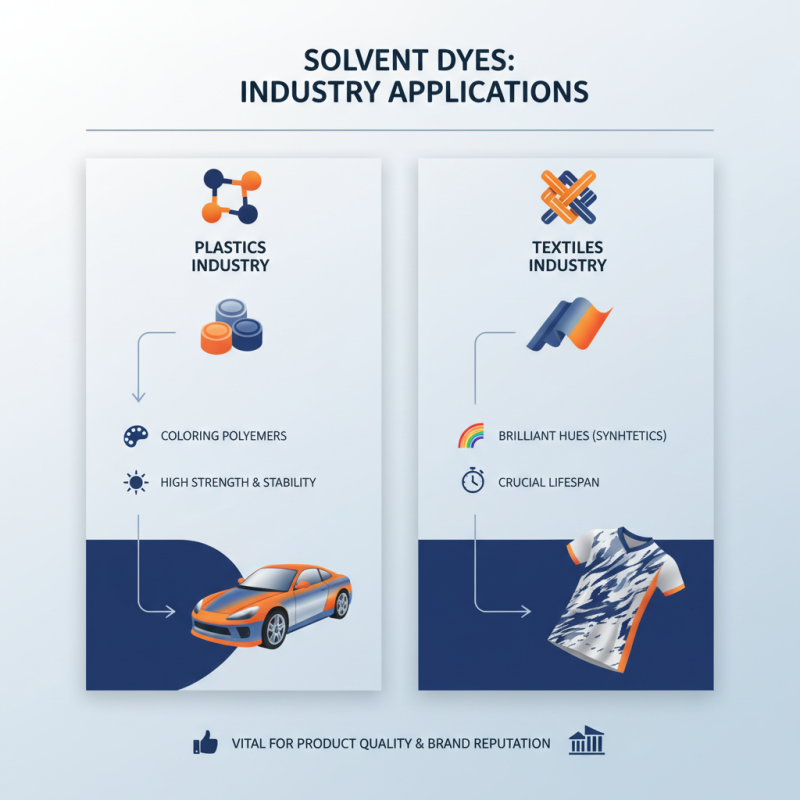
Solvent dyes play a vital role in various industries, each with specific requirements. The plastics industry uses these dyes for coloring polymers. They need high color strength and stability. This ensures that their products maintain vibrant colors over time. In textiles, solvent dyes provide brilliant hues, especially for synthetics. The lifespan of the dye is crucial. If it fades, it can affect the brand's reputation.
In cosmetics, the demand for non-toxic colors is increasing. Manufacturers must choose dyes that are both vibrant and safe for skin application. The criteria for selection are strict. Transparency in sourcing is essential for consumer trust. Additionally, the automotive industry relies on solvent dyes for paints and coatings. These dyes must provide excellent durability against environmental factors.
Tip 1: Always check for stability when selecting solvent dyes. It could save time and increase product lifespan. Tip 2: Consider environmental regulations in your industry. Compliance is key to avoiding legal issues. Choosing the right dye requires understanding the application and end-use completely.
Applications of Solvent Dyes in the Plastics Industry
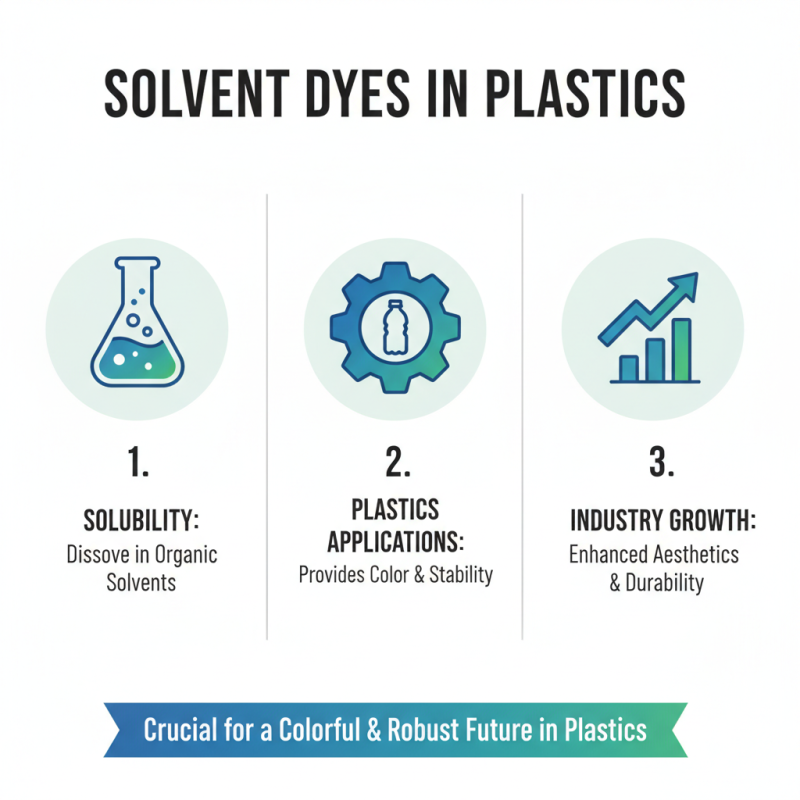
Solvent dyes play a crucial role in the plastics industry by providing vibrant colors and stability. These dyes are soluble in organic solvents, making them ideal for various applications. The plastics sector, which is projected to grow significantly, relies on solvent dyes for enhanced aesthetics and durability.
In plastics, solvent dyes are used in processes like extrusion and injection molding. They offer excellent color uniformity and transparency. According to industry reports, the use of solvent dyes in plastics is expected to grow by 4.2% annually. This growth reflects the increasing demand for colored plastics in consumer products.
Tips: Always test solvent dyes in small batches before full production. This ensures optimal performance and color consistency. Additionally, consider the environmental impact of these dyes. Some may have potential compatibility issues, which can affect the final product's quality.
Moreover, the choice of solvent dye can affect the recyclability of plastics. Dyes that hinder recycling can lead to more waste. It’s vital to balance aesthetics with sustainability. Engaging with suppliers about dye characteristics is key. This interaction can enhance product development and innovation.
Role of Solvent Dyes in Textile and Coating Industries
Solvent dyes play a critical role in the textile and coating industries. They are known for their vibrant colors and excellent solubility in organic solvents. In textiles, these dyes provide shades that enhance the aesthetic appeal of fabrics. Industries often rely on solvent dyes to produce rich hues in synthetic fibers. The demand for solvent dyes in textiles is projected to grow by approximately 5% annually, according to market research reports.
In coating applications, solvent dyes are valued for their ability to create transparent colors. They are commonly used in inks, paints, and varnishes. Many manufacturers prefer solvent-based formulas because they provide superior finish quality. Statistical data indicates that the global solvent dye market size was estimated at around $500 million in 2022. This demonstrates a steady usage in both sectors.
Tips: When working with solvent dyes, always consider safety measures. Make sure to use protective gear. Because these dyes are often volatile, proper ventilation is essential in your workspace. Additionally, test small batches to see how the colors develop. Each dye can behave differently, creating inconsistencies that require careful adjustment.
Top Uses of Solvent Dyes in Various Industries
| Industry |
Application |
Common Solvent Dyes |
Properties |
| Textile |
Coloring fabrics, including synthetic fibers |
Solvent Yellow 33, Solvent Red 49 |
High lightfastness, excellent solubility |
| Coatings |
Pigmentation in industrial paints and coatings |
Solvent Blue 104, Solvent Green 3 |
Durability, UV resistance |
| Plastics |
Coloring polyvinyl chloride (PVC) and other plastics |
Solvent Yellow 160, Solvent Black 5 |
Compatibility with polymers, brightness |
| Inks |
Printing inks for various substrates |
Solvent Red 146, Solvent Blue 36 |
Vibrancy, quick-drying |
| Leather |
Dyeing leather goods for lasting color |
Solvent Red 24, Solvent Yellow 14 |
Water resistance, flexibility |
Environmental Considerations and Future Trends in Solvent Dye Usage
The use of solvent dyes spans various industries, from textiles to plastics. However, environmental considerations are becoming increasingly important. Solvent dyes can release volatile organic compounds (VOCs) during application. These compounds can contribute to air pollution. It’s crucial for industries to evaluate their processes carefully.
Recent trends show the push towards greener alternatives. Water-based dyes are gaining traction. These dyes are less harmful to the environment. They can offer similar vibrant colors without the adverse effects of solvents. Yet, this transition is not seamless. Some companies face challenges adapting to these new materials.
The need to innovate is clear. Many industries are now exploring biodegradable solvents. These alternatives could lessen the ecological footprint. However, research is ongoing. It may take time to develop effective options that meet the dyeing standards. There’s still much to learn about sustainability in this field.
Top Uses of Solvent Dyes in Various Industries
This chart illustrates the distribution of solvent dye usage across different industries. The textile industry leads with 35% usage, followed by plastics and printing inks. As environmental considerations become more critical, the trends in solvent dye usage may evolve towards more sustainable alternatives.