10 Best Solvent Dye Powder Suppliers for Global Buyers?

Choosing a reliable solvent dye powder supplier requires more than comparing prices or browsing polished product pages. Global buyers must examine color strength, solubility, heat resistance, batch consistency, and technical support. A brilliant sample may still perform poorly in plastic, fuel, coating, or printing applications. Real testing matters.

This guide introduces ten solvent dye powder suppliers for international purchasing teams. It focuses on practical evidence, including product documentation, laboratory support, manufacturing experience, export capability, and quality-control procedures. Buyers should look for clear specifications, updated safety data sheets, traceable batches, and responsive communication. Certificates can help, but they do not replace independent verification.

No supplier is perfect.

Some companies excel in custom shades but need larger minimum orders. Others offer fast delivery yet provide limited application guidance. Pricing may also change with purity, packaging, freight, and regional requirements. These details are easy to overlook. A careful buyer should request samples, compare test results, and confirm compliance before placing a commercial order.

The following selection is designed to support informed supplier evaluation rather than promote one universal choice. It considers the needs of manufacturers, distributors, and research teams across different markets. Experience suggests that the best partnership develops through transparent questions and documented answers. Still, supplier information can change over time, so readers should verify current capabilities directly. A thoughtful review combines published evidence with hands-on performance, realistic budgets, and long-term reliability.
10 Best Solvent Dye Powder Suppliers for Global Buyers?

What Are Solvent Dye Powders and Where Are They Used?

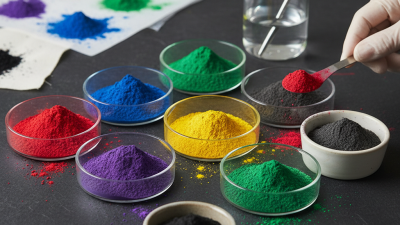
Solvent dye powders are colorants designed to dissolve in organic solvents, oils, waxes, and selected resin systems. Unlike many water-soluble dyes, they usually contain few or no ionic groups. This structure helps them produce clear, strong colors in non-water-based materials. Their fine powder form also supports accurate dosing, but it requires careful handling to prevent dust and uneven blending.

These dyes appear in plastic articles, industrial coatings, printing inks, candles, wood finishes, lubricants, and some synthetic fiber applications. A transparent red dye may brighten a solvent-based ink, while a yellow or blue grade can tint molded plastic without creating heavy particles. Performance depends on the full formula. Heat, light, solvent polarity, and storage conditions can change the final shade.

Selecting a reliable supplier takes more than comparing color charts. Technical teams should request a certificate of analysis, safety data sheet, batch information, and compatibility guidance. Small trials matter. A dye that performs well in one resin may bleed in another. In practice, shade matching is rarely perfect on the first attempt. I have found that written specifications can still miss processing realities, especially during scale-up. Testing under actual temperature and mixing conditions remains essential. Suppliers with clear documentation, stable batch control, and responsive technical support are usually better partners for global buyers.

How to Evaluate Solvent Dye Powder Suppliers Worldwide

How to Evaluate Solvent Dye Powder Suppliers Worldwide

Global buyers should evaluate solvent dye powder suppliers through evidence, not polished catalogs. PlasticsEurope’s Plastics—The Fast Facts 2024 reports global plastics production reached 413.8 million tonnes in 2023. This scale increases pressure on color consistency and supply reliability. Ask for recent COAs, SDS documents, batch numbers, and retention samples. Check whether testing covers strength, solubility, moisture, ash, and thermal stability. Small details matter.

Production experience is difficult to fake. Request a sample from a normal batch, not a specially prepared one. Compare it under your actual resin, solvent, temperature, and dosage conditions. A supplier with ISO 9001 certification may offer stronger process control, but certification alone proves little. Review audit dates, corrective-action records, complaint handling, and change-notification procedures. I would also inspect packaging photographs and warehouse conditions. Dye powder can absorb moisture surprisingly quickly.

Regulatory screening needs equal attention. Check the SDS against the destination market’s hazard communication requirements, and request written statements on restricted substances. The OECD Due Diligence Guidance recommends risk-based supplier evaluation, including traceability beyond the immediate seller. Ask where raw materials originate and how batches are identified. Delivery performance should be measured over several shipments, not one successful order. A low price may hide weak testing or unstable supply. That is easy to overlook. My own evaluation would still leave room for doubt, because supplier documents can be accurate yet incomplete.

Profiles of the 10 Best Solvent Dye Powder Suppliers

Profiles of the 10 Best Solvent Dye Powder Suppliers

A 2024 MarketsandMarkets report places the global dyes and pigments market on a steady growth path through 2029. Grand View Research also identifies plastics, coatings, and fuels as important application areas. These figures suggest stronger demand for consistent solvent dye powders, but market forecasts are not purchasing guarantees.

Supplier 1 focuses on transparent yellow and red shades for plastics.
Supplier 2 specializes in blue and green powders with strong heat stability.
Supplier 3 serves coating manufacturers and provides technical formulation support.
Supplier 4 offers small trial quantities, useful for laboratory screening.
Supplier 5 emphasizes batch documentation and color-index traceability.
Supplier 6 supports large-volume orders with standardized packaging.
Supplier 7 develops custom shades for packaging and industrial applications.
Supplier 8 provides powders designed for oil-soluble systems.
Supplier 9 highlights low-moisture processing and sealed inner bags.
Supplier 10 combines regional warehousing with export documentation support.

Quality evidence matters more than polished websites. Buyers should request certificates of analysis, sample retention policies, SDS files, and migration data where relevant. A reliable supplier should explain shade tolerance, solubility, particle size, and recommended dosage clearly. Ask for production samples.

Not every supplier performs equally across every application. That is the difficult part. A low price may hide weaker consistency, slower communication, or limited technical support. Independent laboratory testing remains valuable, especially when heat, light, and solvent resistance affect final product performance. Supplier claims should be verified against actual batch results.

How to Compare Product Quality, Pricing, and Export Services

Comparing solvent dye powder suppliers requires more than checking a price list. Request recent samples from the same color range and test them under identical conditions. Check shade strength, dispersion, moisture, particle size, and heat stability. A reliable supplier should provide a clear certificate of analysis for each batch. Ask for safety data and technical specifications before placing a trial order. Small details matter.

Pricing should be measured against usable output, not only cost per kilogram. A cheaper powder may need higher dosage or create uneven coloring. Compare minimum order quantities, sample charges, packaging, payment terms, and production lead times. Calculate the landed cost, including freight, insurance, duties, and possible storage fees. Ask whether prices remain stable across repeat batches. They often do not. That deserves careful review.

Export service can prevent expensive delays. Confirm available shipping terms, pallet protection, moisture barriers, labeling, and document accuracy. The supplier should explain its process for commercial invoices, packing lists, certificates of origin, and batch traceability. Request photographs of sealed cartons and warehouse conditions. A responsive export team should answer technical questions clearly, not hide behind generic promises. Check references from buyers in similar markets when possible. Even experienced purchasers can overlook seasonal production pressure or port congestion. Leave room for that risk in the purchasing plan.

What Global Buyers Should Check Before Placing an Order

Global buyers comparing solvent dye powder suppliers should inspect evidence, not polished catalogs. Request a current COA, SDS, technical data, and batch traceability. These documents should identify purity, shade strength, moisture, particle size, and recommended storage. Ask whether test methods match your laboratory standards. A familiar color name is not enough. Request a representative sample from a recent production batch. Check dissolution in your actual solvent, not only in a supplier’s demonstration. Record temperature, mixing time, filtration, and final clarity. Small differences can affect pumps, spray nozzles, or transparent coatings. I once focused too heavily on price. That was a mistake. The cheaper powder required extra filtration and caused production delays.

Before placing an order, verify manufacturing capacity, lead time, minimum order quantity, and packaging protection. Moisture barriers matter during long sea routes and humid warehouse storage. Confirm that labels show lot numbers, net weight, handling guidance, and origin details. Ask for pre-shipment inspection or sealed retention samples. Independent testing can confirm identity and performance when the application is critical. Check whether the supplier maintains documented quality procedures and answers technical questions clearly. Vague answers deserve a second review. Also examine export paperwork, customs classifications, and destination-country chemical requirements with qualified local advisers. Requirements differ across markets. Do not assume one certificate works everywhere. I would also test a second batch, because consistency is often harder than the first successful sample.

This procurement-screening model highlights the main checks global buyers should complete before ordering solvent dye powder. The percentages represent a practical evaluation framework rather than a ranking of suppliers. Buyers should confirm technical specifications, documentation, samples, regulatory compliance, packaging, lead time, and total landed cost directly with each supplier.

Enquire Now