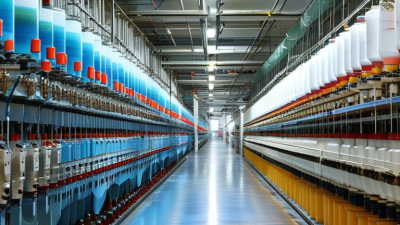
What Is Chemical Manufacture and How Does It Work?

Chemical manufacture turns selected raw materials into useful products through controlled chemical and physical processes. It supports medicines, clean water, food ingredients, coatings, batteries, and countless everyday materials. Yet the term covers more than mixing substances in a factory. It includes research, process design, equipment selection, production, testing, storage, and waste management.

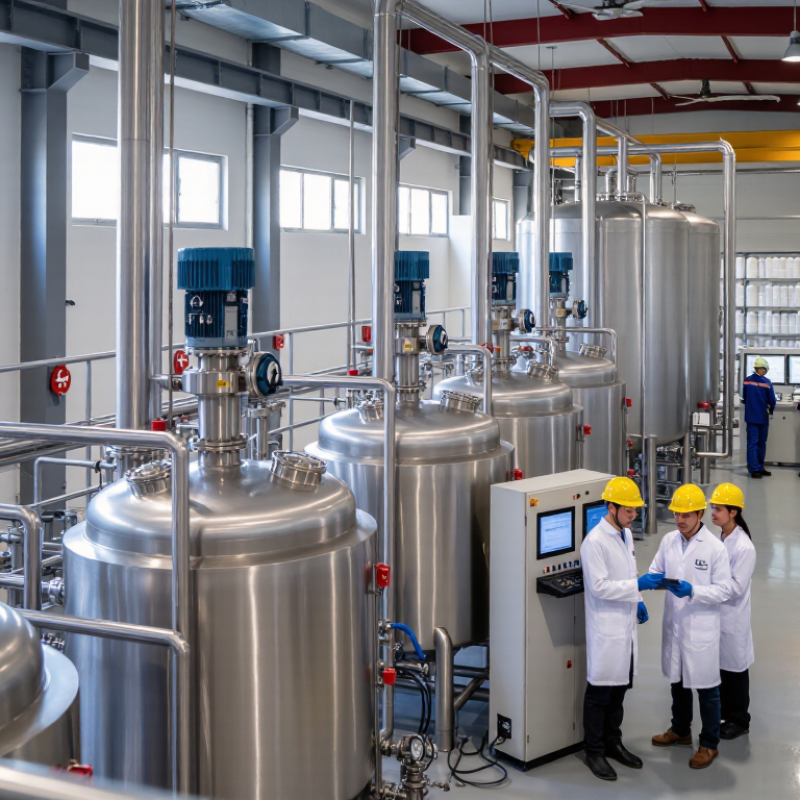
A typical facility begins with approved feedstocks and a carefully reviewed process recipe. Operators monitor temperature, pressure, flow, and reaction time through sensors and control systems. Some materials react in large vessels, while others pass through filters, dryers, columns, or crystallizers. Each stage has a defined purpose. Quality teams then test samples for identity, purity, strength, and consistency. Records connect every batch to its raw materials, equipment, and operators.

Safety remains central at every step. Engineers assess hazards before production and design safeguards around people, equipment, and nearby communities. Ventilation, protective systems, emergency procedures, and environmental controls reduce foreseeable risks. Regulatory requirements also guide labeling, transportation, emissions management, and product release. The work depends on chemists, engineers, technicians, inspectors, and trained operators. Their experience matters, especially when real equipment behaves differently from a laboratory model. That difference is easy to underestimate. No process is perfect. Even a well-designed plant needs maintenance, investigation, and continuous improvement. Understanding how chemical manufacture works means examining both the science and the disciplined decisions that make production reliable.
What Is Chemical Manufacture and How Does It Work?

Chemical Manufacturing Defined: A Global Industry Worth US$5.7 Trillion in 2022

What Is Chemical Manufacture and How Does It Work?

Chemical manufacturing is the controlled conversion of raw materials into useful substances. These materials may include minerals, natural gases, oils, salts, agricultural feedstocks, and recycled inputs. In 2022, the global chemical manufacturing industry was valued at approximately US$5.7 trillion. That figure shows its enormous economic reach. It supports construction, medicine, food production, electronics, textiles, water treatment, and energy systems. The industry is not one factory, but a connected network of producers, laboratories, logistics providers, and specialist users.

Production usually begins with formulation or chemical reaction planning. Engineers select temperatures, pressures, catalysts, and mixing times. Automated instruments monitor each stage. Samples are tested for purity, strength, moisture, and consistency. Waste control also matters. Modern facilities increasingly recover heat, reuse process water, and reduce unwanted emissions. Still, performance varies widely between sites. A large economic figure does not automatically prove efficiency or responsible operation.

Tips: Check the source and year behind any market estimate. Compare production volume, revenue, and regional coverage carefully. Ask how a product is tested, stored, transported, and handled. Safety data should be current and easy to understand. Small process errors can create costly quality problems. Good manufacturing depends on documentation, trained workers, maintenance, and honest reporting. The US$5.7 trillion estimate is useful, but it may not capture every informal or emerging activity equally.

Raw Materials and Feedstocks: Hydrocarbons, Minerals, Air, Water, and Biomass

Chemical manufacture begins with feedstocks, not finished products. Hydrocarbons from crude oil and natural gas provide carbon and hydrogen for polymers, solvents, detergents, and synthetic fibers. Refineries separate crude into fractions, while steam crackers break larger molecules into ethylene, propylene, and other building blocks. These gases may look simple, but they support thousands of downstream reactions. The International Energy Agency reports that petrochemicals could consume over 20% of global oil demand growth by 2030. That figure shows why feedstock selection matters.

Minerals supply elements that hydrocarbons cannot provide. Phosphate rock supports fertilizer production, while limestone supplies calcium for glass, cement, and chemical processing. The U.S. Geological Survey estimated global phosphate rock mine production at about 220 million metric tons in 2023. Air and water also become working materials. Cryogenic separation produces nitrogen and oxygen, and purified water controls temperature, pressure, and reaction quality. Small impurities can damage catalysts or change product color.

Biomass adds renewable carbon through crops, forestry residues, oils, and organic waste. The Food and Agriculture Organization reported global primary crop production above 9 billion tonnes in recent years. Yet renewable does not automatically mean sustainable. Land use, transport, water demand, and energy intensity still require careful measurement. The boundary is less tidy than diagrams suggest. A plant may combine several feedstocks, recycle process water, and recover heat, but losses remain. Industry reports often present averages, while real facilities behave differently. Better decisions need local data, transparent accounting, and repeated verification.

Core Production Stages: Reaction, Separation, Purification, and Formulation

What Is Chemical Manufacture and How Does It Work?

Core Production Stages: Reaction, Separation, Purification, and Formulation

Chemical manufacture converts measured raw materials into controlled products. The process usually begins with a reaction. Operators adjust temperature, pressure, mixing speed, and residence time. A reactor may look simple, yet small changes can alter yield, color, or unwanted by-products. The International Energy Agency reports that chemical feedstocks represented about 12% of global oil demand in 2017. It also expects petrochemicals to drive more than half of oil-demand growth through 2030.

Separation follows the reaction. Distillation removes components by boiling point, while filtration, centrifugation, or membrane systems handle solids and liquids. Purification then reduces trace impurities through washing, crystallization, adsorption, or additional distillation. Testing matters here. Laboratories check concentration, moisture, particle size, and stability before release. The OECD’s Environmental Outlook notes that chemical production and use are expanding worldwide, increasing the need for efficient controls and safer process design. Perfect separation is rarely realistic. Engineers manage risk, waste, and energy use instead.

Tips: Map each material balance before changing equipment. Keep samples from every major stage. A clean-looking stream may still contain problematic residues. Formulation is the final practical step. Producers blend active ingredients with solvents, stabilizers, fillers, or coatings. They must ensure consistent performance during storage and use. I sometimes find the formulation stage underestimated. It can decide whether a technically successful reaction becomes a reliable product.

Industrial Operations: Batch and Continuous Processes at Commercial Scale

What Is Chemical Manufacture and How Does It Work?

Industrial Operations: Batch and Continuous Processes at Commercial Scale

Chemical manufacture converts measured raw materials into useful products through controlled physical and chemical operations. At commercial scale, engineers manage temperature, pressure, mixing, flow, and reaction time. Every change can affect product quality.

Batch processing uses a vessel for a defined quantity of material. Operators charge ingredients, adjust temperature, and monitor mixing through the production cycle. Samples may be tested before the batch moves to filtration, drying, or packaging. This approach suits varied products and smaller production campaigns. It also allows careful recipe adjustments. However, cleaning between batches takes time. Small errors matter.

Continuous processing moves materials through connected equipment at a steady rate. Pumps, heat exchangers, reactors, and separators work together under automated control. Sensors track conditions every second, while control loops adjust flow or temperature. Stable operation can improve efficiency and reduce downtime. Yet, a minor disturbance may travel through the entire line. In practice, even a well-designed schedule can slip.

Commercial facilities rely on written procedures, equipment inspections, calibrated instruments, and trained personnel. Engineers compare actual results with process specifications and investigate deviations rather than hiding them. Material balances help identify losses, while wastewater and energy use require constant attention. Digital records improve traceability, though they do not replace experienced judgment. No process is perfectly predictable. Good manufacturing leaves room for cautious review.

What Is Chemical Manufacture and How Does It Work?

Industrial Operations: Batch and Continuous Processes at Commercial Scale
Typical industrial characteristics are indicative ranges; actual values depend on chemistry, equipment design, safety requirements, and product specifications.
Dimension Batch Manufacturing Continuous Manufacturing Industrial Significance
Basic operating concept A measured quantity of raw materials is charged into equipment, processed for a defined time, and discharged before the next cycle begins. Raw materials enter continuously, while product and by-products leave continuously at controlled flow rates. The operating mode determines production flexibility, equipment utilization, control strategy, and inventory requirements.
Common process steps Charging, mixing, reaction, heating or cooling, separation, washing, drying, sampling, cleaning, and unloading. Continuous feeding, reaction, heat exchange, separation, purification, product finishing, monitoring, and controlled discharge. Most commercial plants combine several unit operations rather than relying on one single piece of equipment.
Typical production duration One cycle may last from a few hours to several days, depending on reaction time, downstream processing, and cleaning requirements. A stable campaign may operate for days, weeks, or months, with planned shutdowns for maintenance, inspection, or product changeover. Long continuous campaigns can improve asset utilization, while batch cycles simplify product changeovers.
Material movement Materials move in discrete lots. Each lot can be identified, sampled, tested, and released separately. Materials move as a controlled stream. Product quality is linked to operating conditions over time and production location. Traceability and quality systems must match the way material moves through the plant.
Typical equipment Stirred-tank reactors, batch mixers, crystallizers, centrifuges, filter-dryers, and vessel-based separation equipment. Plug-flow or continuous stirred-tank reactors, heat exchangers, distillation columns, membrane systems, and continuous separators. Equipment selection depends on reaction kinetics, heat removal, viscosity, solids content, pressure, and throughput.
Product flexibility High flexibility. The same equipment may produce different grades or products after validated cleaning and setup changes. Lower flexibility during operation, although multiple parallel lines or controlled campaigns can support product variety. Batch processing is generally well suited to specialty chemicals and variable production schedules; continuous processing suits stable, high-volume demand.
Scale and throughput Throughput is limited by vessel capacity, cycle time, loading and unloading, cleaning, and changeover frequency. Throughput is determined mainly by feed rates, residence time, equipment size, and the duration of the production campaign. Continuous systems can provide high output from compact equipment, while batch plants can scale by increasing vessel size or adding parallel units.
Temperature and pressure control Conditions may change during charging, reaction, heating, cooling, and discharge. Automated control maintains defined operating limits. Conditions are maintained continuously using flow control, temperature control, pressure control, and automated feedback systems. Stable control is essential for reaction selectivity, product quality, energy efficiency, and safe operation.
Quality control Samples are commonly taken at defined process stages and from each lot for laboratory testing and release decisions. Online sensors, process analyzers, statistical monitoring, and periodic laboratory samples are used to verify steady-state quality. Typical measurements include composition, purity, moisture, particle size, viscosity, density, color, and impurity levels.
Energy use Energy is used for repeated heating, cooling, agitation, separation, drying, cleaning, and vessel preparation. Steady operation can improve heat integration and reduce repeated start-up and shutdown losses, although utilities remain process-specific. Energy performance depends on heat recovery, insulation, vapor recovery, separation efficiency, and equipment loading.
Material efficiency Yield and waste vary by recipe, side reactions, off-specification batches, cleaning losses, and solvent recovery performance. Consistent feed and residence time can reduce variability and waste, but start-up, shutdown, and transition material may require separate handling. Mass balance calculations track raw materials, products, recovered materials, emissions, wastewater, and solid waste.
Safety considerations Operators must manage charging errors, incompatible additions, heat release, pressure buildup, and batch-to-batch variation. Key risks include loss of flow, blocked lines, control-system failure, runaway reactions, and deviations during start-up or shutdown. Safeguards may include relief systems, alarms, interlocks, containment, inerting, emergency shutdowns, and hazard reviews.
Changeover and cleaning Changeovers can require draining, cleaning, inspection, equipment setup, and verification before the next product. Changeovers are less frequent but may require flushing, line clearance, transition control, and management of mixed-product material. Cleaning and changeover time affect availability, production cost, cross-contamination risk, and scheduling flexibility.
Best-fit applications Specialty chemicals, formulated products, custom intermediates, low-to-medium volume products, and products requiring frequent recipe changes. Large-volume commodities, gases, fuels, polymers, acids, alkalis, and other products with stable demand and well-characterized chemistry. The appropriate choice depends on volume, product variety, reaction behavior, capital cost, risk, and required quality consistency.
Hybrid or semi-batch operation A vessel operates in batches while selected feeds, catalysts, reactants, or additives are introduced gradually. Continuous feed or removal may be combined with batch reaction, batch finishing, or campaign-based production. Hybrid systems can control heat release, improve selectivity, reduce batch size, and balance flexibility with throughput.
Performance indicators Batch yield, cycle time, right-first-time rate, equipment utilization, energy per unit of product, waste generation, and changeover time. Throughput, on-stream availability, residence-time stability, conversion, selectivity, energy intensity, emissions, and unplanned downtime. These indicators help manufacturers improve cost, capacity, reliability, safety, environmental performance, and product consistency.

Safety and Sustainability: Managing Energy, Emissions, Waste, and Process Risk

Chemical manufacture turns raw materials into controlled products through reactions, separation, drying, and packaging. Operators monitor temperature, pressure, flow, and composition at every stage. A small change in heat can alter yield or create an unsafe reaction. In a well-run plant, sensors support trained judgment rather than replace it. Operators still compare readings with physical signs, such as vibration, unusual odors, or rising pump temperatures. Small leaks matter.

Energy use often begins with heating reactors and continues through distillation, compression, cooling, and wastewater treatment. Engineers can reduce demand by recovering heat from hot streams and improving insulation around pipes and tanks. Emissions require measurement at stacks, vents, and fugitive sources. A clean dashboard can hide gaps if instruments are poorly calibrated. Data can mislead. Regular sampling, maintenance records, and independent checks make reported results more credible.

Waste control starts with process design, not the disposal area. Higher selectivity can reduce unwanted by-products, while closed transfer systems limit spills and worker exposure. Wastewater treatment must match its chemistry, including pH, dissolved solids, and organic load. Process risk reviews should test power loss, blocked lines, runaway reactions, and human error. Emergency drills reveal weaknesses that written procedures miss. Models can be wrong. Production targets may quietly compete with safe decisions, so management must protect stop-work authority during delivery pressure.

Enquire Now