

Top Pigment Dye Manufacturers for Global Buyers
Global buyers need more than a colorful product photograph. They need dependable pigment dye performance, documented sourcing, and technical evidence. A supplier may promise rich shades, yet testing can reveal weak rubbing fastness, uneven penetration, or excessive batch variation. Small details matter.
Professor Richard S. Blackburn, a recognized textile coloration and sustainability researcher, has stated, “Sustainable coloration begins with understanding the chemistry, not simply choosing a greener label.” This principle guides our review of leading pigment dye manufacturers. Their capabilities should be assessed through laboratory reports, production experience, shade consistency, and environmental management.
The strongest manufacturers explain their pigment systems clearly. They identify binders, curing conditions, restricted substances, and recommended fabric types. They also provide samples before large orders. That is practical.
Global buyers should examine factory capacity, quality-control records, export experience, and communication speed. A modern facility is useful, but it does not guarantee reliable delivery. Supplier claims still require verification. Independent testing remains valuable, especially for wash fastness, light fastness, formaldehyde limits, and color migration.
This guide compares manufacturers from a buyer’s perspective. It considers product range, customization, certifications, minimum order quantities, and after-sales support. Pricing appears in context, because the cheapest pigment dye can create higher costs through rework and rejected garments. Some evaluations may remain imperfect, particularly where public data is limited. Buyers should confirm current specifications directly.
The goal is not to declare one universal winner. Fabric type, end use, regional standards, and production scale change the best choice. A careful shortlist creates fewer surprises and more consistent color results.
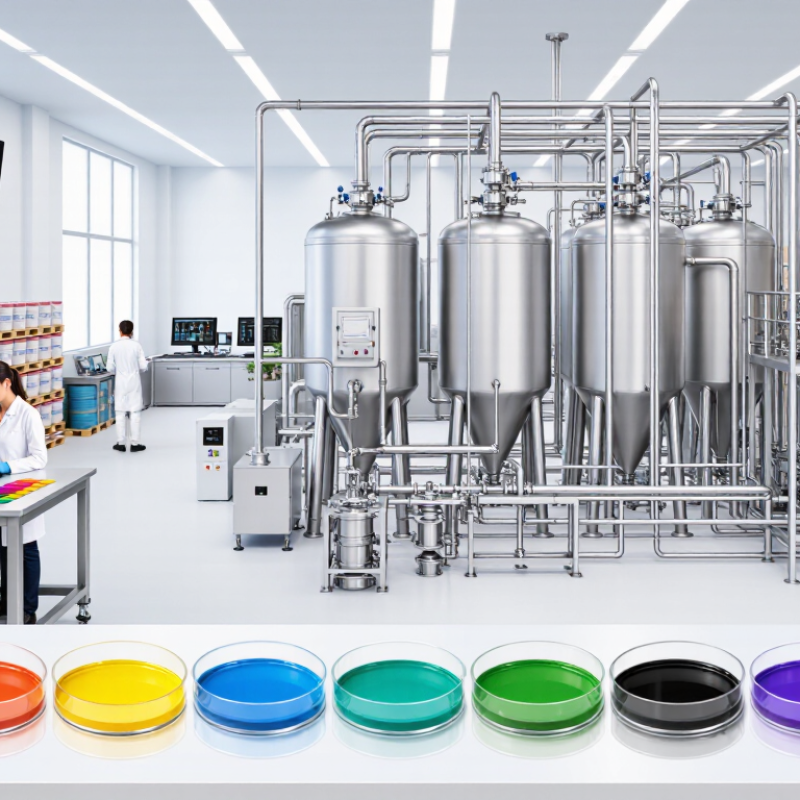
Pigment Dye Market Scope: 2024 Demand, Applications, and Trade Regions
Pigment Dye Market Scope: 2024 Demand, Applications, and Trade Regions
The 2024 pigment colorants market remains driven by textiles, coatings, plastics, printing inks, and packaging. Grand View Research places the global dyes and pigments market in the multi-billion-dollar range, with steady growth through 2030. Estimates differ by definition. Some reports include organic pigments, dispersions, and specialty colorants together. That makes direct comparison imperfect, but still useful.
Textile processors want strong shade consistency, low water use, and reliable batch performance. Automotive coatings demand heat resistance and weather stability. Packaging converters often prioritize migration control and print clarity. Demand is strongest across Asia-Pacific, where textile and manufacturing capacity is concentrated. Europe and North America remain important for regulated coatings, technical textiles, and premium applications. UN Comtrade data also shows substantial trade flows in prepared pigments, colorants, and related formulations across these regions.
Tips: Ask manufacturers for shade cards, technical data sheets, and recent batch samples. Check lightfastness, washing resistance, dispersion stability, and restricted-substance compliance. Do not judge suppliers by price alone. A cheaper pigment may require more dosage or create rework. Reviewing third-party test results is safer than trusting broad marketing claims. One overlooked issue is regional water quality; it can change dispersion behavior and final shade.
| Market Dimension | 2024 Market Status | Primary Demand Areas | Typical Product Requirements | Trade and Procurement Considerations |
|---|---|---|---|---|
| Textile and Apparel | High Demand | Garment printing, home textiles, upholstery, footwear, denim effects, and synthetic-fiber coloration | Good dispersion, strong shade development, migration control, wash resistance, and compatibility with polyester, cotton blends, and coated fabrics | Buyers commonly evaluate color consistency, batch-to-batch reproducibility, restricted-substance compliance, technical support, and delivery reliability |
| Printing Inks | High Demand | Packaging, labels, publication printing, digital textile printing, and decorative printing | High tinting strength, fine particle size, low sedimentation, good transparency or opacity, and compatibility with water-based, solvent-based, or UV-curable systems | Global sourcing decisions are influenced by ink-system compatibility, drying performance, regulatory documentation, and repeat-order consistency |
| Paints and Coatings | Medium to High Demand | Industrial coatings, architectural coatings, automotive refinishing, powder coatings, and protective finishes | Weather resistance, heat stability, chemical resistance, dispersibility, and controlled color strength | Technical data sheets, safety data sheets, lightfastness data, formulation testing, and local compliance support are important for qualification |
| Plastics and Polymer Products | Medium to High Demand | Plastic packaging, engineering plastics, fibers, films, household products, and consumer goods | Thermal stability, low bleeding, compatibility with polymer matrices, low volatility, and resistance to processing conditions | Purchasers typically require processing-temperature data, migration information, color-index references, and samples for extrusion or injection-molding trials |
| Leather, Synthetic Leather, and Coated Materials | Moderate Demand | Footwear, bags, furniture coverings, automotive interiors, and fashion accessories | Surface uniformity, rub resistance, flex resistance, adhesion, and compatibility with polyurethane or acrylic coating systems | Regional demand is closely linked to footwear, furniture, automotive-trim, and accessories manufacturing clusters |
| Asia-Pacific | Largest Manufacturing Base | Textiles, apparel, plastics, printing inks, coatings, and industrial intermediates | High-volume grades, competitive pricing, customized shades, and flexible packaging sizes | Major sourcing factors include production scale, port access, lead time, export documentation, and compliance with destination-market chemical rules |
| Europe | High-Value Demand | Specialty coatings, premium textiles, packaging inks, plastics, and regulated consumer applications | High performance, low environmental impact, traceability, restricted-substance control, and consistent technical documentation | Suppliers must be prepared for stringent chemical, worker-safety, waste, and product-stewardship requirements, including applicable REACH obligations |
| North America | Stable Industrial Demand | Packaging, construction coatings, automotive products, plastics, textiles, and specialty printing | Durability, regulatory compliance, formulation support, and reliable supply continuity | Importers generally assess SDS quality, transportation classification, product consistency, customer service, and continuity plans |
| Latin America | Developing Demand | Textiles, footwear, packaging, paints, plastics, and consumer products | Cost-effective grades, strong coloration, simple handling, and broad application compatibility | Pricing, import duties, distributor availability, payment terms, logistics, and technical assistance can strongly affect supplier selection |
| Middle East and Africa | Emerging Demand | Construction coatings, packaging, textiles, plastics, and regional manufacturing applications | Good heat and light stability, storage stability, and suitability for demanding transport and climate conditions | Buyers often prioritize shelf life, container durability, regional stock availability, documentation, and dependable shipment scheduling |
| Key International Trade Classification | Trade-Data Proxy | Synthetic organic colouring matter, preparations based on colouring matter, and other colouring materials | Commercial specifications vary by chemical composition, application, and national tariff schedule | HS heading 3204 is widely used for synthetic organic colouring matter; HS 3206 covers certain other colouring matter. Exact classification should be confirmed with customs authorities |
| Buyer Qualification Criteria | Essential | All end-use sectors and import regions | Color Index or chemical identity, purity, particle-size data, shade card, batch certificate, SDS, technical data sheet, and application-test results | Pre-shipment samples, audit information, quality agreements, minimum order quantities, Incoterms, payment terms, and lead-time commitments should be confirmed before contracting |
Related Posts
-

How to Find Reliable Organic Dye Suppliers
-

Top 10 Solvent Pigments in China You Should Know?
-

How to Find Reliable Chemical Producers in 2026?
-

How to Choose the Right Chemical Distributor for Your Business Needs?
-

2026 Best Organic Pigments for Art and Design Applications?
-

2026 Top Pigment Color Trends for Global Buyers?