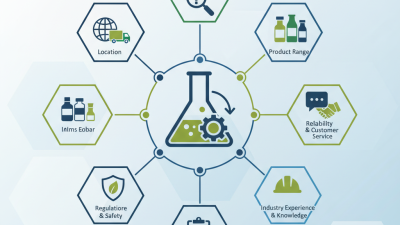
10 Tips for Choosing the Right Chemical Solutions?

Choosing the right chemical solutions is rarely a matter of picking the strongest product. The better choice must fit the process, equipment, people, and final application. A solution that performs well in a laboratory may fail on a busy production line. Temperature, concentration, contact time, storage conditions, and surface compatibility can change the result.

This guide presents ten practical tips for making a safer, more informed decision. It considers technical performance, supplier expertise, documentation, and long-term value. Start with a clearly defined problem. Then compare products against measurable requirements, not attractive claims. Review safety data sheets, certificates of analysis, batch records, and recommended handling procedures. Reliable suppliers should explain limitations as clearly as benefits. They should also provide traceable information and responsive technical support.

Small details matter. A cloudy solution, damaged seal, or missing label can signal deeper quality concerns. Test compatibility with seals, tanks, coatings, and nearby materials before full-scale use. Monitor results under real operating conditions. Keep written records of dosage, temperature, outcomes, and unexpected changes.

No checklist is flawless. Assumptions can survive unnoticed.

Independent testing may reveal weaknesses that sales literature does not mention. Environmental impact, waste management, worker training, and applicable standards also deserve attention. The cheapest option can become expensive after rework, downtime, or disposal costs. By combining practical testing with verified documentation, teams can select chemical solutions that are effective, responsible, and suitable for their specific needs.

10 Tips for Choosing the Right Chemical Solutions?

Defining the Chemical Application and Desired Outcomes

Defining the Chemical Application and Desired Outcomes

Choosing a chemical solution starts with the application, not the product name. Describe the material, surface, process temperature, contact time, and current problem. A cleaning process may need soil removal, corrosion control, or safer wastewater handling. These goals can conflict. A stronger formula is not always better. My early mistake was treating visible cleanliness as the only success measure. Later testing showed residue and surface damage. Small details matter.

Tip 1: Write measurable outcomes before comparing solutions. Specify target pH, cleaning time, residue limits, and acceptable material change. Tip 2: Identify every exposed material, including seals, coatings, pumps, and drainage components. Request current safety data and technical guidance from qualified professionals. Never rely on a supplier’s general recommendation alone. Run a controlled trial on a small area first.

Tip 3: Record temperature, concentration, and contact time during testing. Results can shift quickly when one variable changes. Tip 4: Check how the solution affects workers, ventilation, storage, and approved disposal procedures. Tip 5: Compare performance with total operating cost, not purchase price. Include water use, downtime, protective equipment, and maintenance. I still find some outcomes difficult to predict, especially when equipment is old. That uncertainty deserves documentation, repeat testing, and cautious adjustment.

10 Tips for Choosing the Right Chemical Solutions: Define the Application and Desired Outcomes

Typical target pH windows vary by application. Defining the operating range first helps align chemical selection with the desired outcome, such as scale removal, surface cleaning, coagulation, biological treatment, or nutrient availability. Always confirm the range against site-specific process requirements and safety procedures.

Evaluating Safety, Compatibility, and Regulatory Requirements

Choosing a chemical solution requires more than comparing concentration and price. Safety data should guide the decision from the first review. The International Labour Organization estimates 2.78 million work-related deaths occur each year. Chemical exposure is only one part of that burden, but it deserves careful control. Read the safety data sheet before ordering. Check hazard classifications, exposure limits, storage conditions, and emergency measures. Short sentences help. Details matter.

Compatibility must be tested against the real process, not just the container label. Review contact with metals, seals, plastics, coatings, heat, and nearby chemicals. A small sample test can reveal swelling, corrosion, color change, or unexpected heat. Document the result. Ask whether workers can handle the product without awkward transfers or open pouring. The safest option may be the one requiring fewer manual steps.

Regulatory checks should cover every stage. Confirm labeling, worker training, waste handling, transport, reporting, and local discharge limits. The United Nations Globally Harmonized System provides a common framework, but national rules still differ. The European Chemicals Agency reports that chemical compliance depends on accurate hazard communication and supply-chain information. Do not treat a supplier document as permanent. Formulas and rules change. Review dates, revision numbers, and approval records before use. No checklist is perfect. A missed compatibility detail can still undermine an otherwise careful selection.

10 Tips for Choosing the Right Chemical Solutions? - Evaluating Safety, Compatibility, and Regulatory Requirements

No. Evaluation Dimension What to Check Practical Selection Criteria Relevant Safety or Regulatory Reference Recommended Priority
1 Define the Intended Use Identify the process, concentration, temperature, pressure, contact time, application method, and expected performance. Select a solution that is validated for the actual operating conditions rather than for a general-purpose application. Review the product technical data sheet, operating instructions, and applicable workplace risk assessment requirements. Critical
2 Review Hazard Classification Check flammability, corrosivity, acute toxicity, oxidizing properties, sensitization, carcinogenicity, and environmental hazards. Prefer the least hazardous solution that meets performance requirements, while considering exposure frequency and quantity used. Use the current Safety Data Sheet and Globally Harmonized System hazard pictograms and signal words. Critical
3 Verify SDS Quality and Completeness Confirm that the SDS includes composition, first aid, firefighting, accidental release, handling, storage, exposure controls, disposal, and transport information. Do not approve a chemical when the SDS is outdated, incomplete, unavailable in the required language, or inconsistent with the supplied label. SDS format commonly follows GHS-based 16-section requirements; local implementation may differ by jurisdiction. Critical
4 Test Material Compatibility Assess effects on metals, elastomers, plastics, coatings, seals, gaskets, glass, and process equipment. Use small-scale testing, immersion testing, or supplier compatibility data under actual concentration and temperature conditions. Treat compatibility charts as guidance only; actual results can change with temperature, stress, impurities, and exposure duration. Critical
5 Evaluate Chemical Reactivity Identify incompatible substances, dangerous decomposition products, heat generation, gas release, polymerization, and pressure risks. Separate acids, bases, oxidizers, reducers, water-reactive materials, and other incompatible chemical groups according to the SDS. Check SDS Sections 7 and 10, including handling, storage, stability, reactivity, and incompatible materials. Critical
6 Assess Worker Exposure Controls Consider inhalation, skin, and eye exposure; volatility; dust or aerosol formation; duration; frequency; and ventilation quality. Choose lower-volatility or lower-exposure alternatives where feasible, then define engineering controls, PPE, hygiene, and training. Compare applicable occupational exposure limits and follow the SDS exposure-control recommendations. High
7 Confirm Storage and Handling Needs Review storage temperature, ventilation, ignition-control requirements, secondary containment, shelf life, and segregation rules. Select packaging and storage conditions that prevent leaks, contamination, pressure buildup, and accidental mixing. Follow SDS Section 7 and applicable fire-code, chemical-storage, and workplace-management requirements. High
8 Check Regulatory Status Verify substance registration, authorization, restrictions, inventory status, labeling, notification, and permitted use in each target market. Obtain written confirmation that the intended formulation and use are legally permitted before purchase or implementation. Examples include REACH and CLP in the European Union, and national chemical-management and hazard-communication rules elsewhere. Critical
9 Plan Transport and Waste Disposal Determine transport classification, packaging group, labeling, emergency information, waste code, treatment method, and discharge restrictions. Choose a solution with a manageable logistics and disposal profile, without assuming dilution makes hazardous waste non-hazardous. Review SDS Sections 13 and 14 and applicable land, sea, or air transport regulations based on the shipping route. High
10 Validate Performance and Lifecycle Cost Compare effectiveness, dosage, process time, equipment impact, worker protection, waste generation, training, and emergency-response costs. Use controlled trials and total cost of ownership rather than purchase price alone; document acceptance criteria and review performance periodically. Maintain change-control records, risk assessments, training records, and periodic reviews when the formulation or process changes. Medium
Implementation note: Regulatory obligations vary by country, application, concentration, and industry. Always verify the current local requirements and use the latest supplier documentation before approval.

Comparing Purity, Performance, and Supplier Reliability

When selecting a chemical solution, purity is only the starting line. Ask for a current certificate of analysis, not a marketing promise. Check assay, water, metals, residue, test method, uncertainty, and lot number. These details show whether the material fits your process. For critical work, compare the specification with your own incoming-test results. One elegant certificate is not enough.

ISO’s 2023 Survey recorded 1,265,216 ISO 9001 certificates across 189 countries and economies. This scale shows why quality systems matter, but certification does not prove every batch performs identically. Pilot trials should measure yield, stability, filtration time, and waste, using your actual equipment. Small differences can become large costs during scale-up.

Supplier reliability needs evidence beyond fast replies. Review three years of on-time delivery, complaint closure, change notices, and batch consistency. Request a documented change-control process and a realistic continuity plan. The World Bank’s 2023 Logistics Performance Index assessed 139 economies through customs, infrastructure, shipment quality, tracking, and timeliness. Use those dimensions when testing delivery promises. I have sometimes overvalued purity numbers and underweighted packaging damage. That mistake is expensive. Inspect seals, labels, storage records, and transport conditions at receipt. Keep reserve stock only when stability data supports it; otherwise, aging inventory becomes hidden risk. Ask for references from comparable applications, while protecting confidential information.

Reviewing Costs, Storage Conditions, and Environmental Impact

10 Tips for Choosing the Right Chemical Solutions?

Reviewing Costs, Storage Conditions, and Environmental Impact

Choosing a chemical solution starts with its full cost, not the purchase price. Include shipping, protective equipment, storage space, testing, and disposal. A cheaper concentrate may require extra dilution work. That changes labor costs. Check shelf life before ordering large containers. Unused material is still an expense. Request current safety data and technical specifications from the supplier. Compare concentration, purity, packaging size, and expected usage. Numbers can mislead.

Storage conditions deserve practical attention. Confirm temperature, humidity, light exposure, ventilation, and compatibility requirements. A small temperature-controlled cabinet can consume significant energy. Inspect the container closure and secondary containment before delivery. Keep incompatible materials separated. Label every container clearly, including opening dates and expiry dates. Storage is not free. A solution that degrades quickly may create rework, delays, and avoidable waste.

Environmental impact should be measured across the product’s life cycle. Consider raw materials, packaging, transport distance, energy use, and disposal requirements. Concentrated solutions can reduce transport volume, but only when staff can handle dilution safely and consistently. Refillable packaging may help, yet cleaning and return logistics also require resources. Ask whether the supplier provides waste guidance and credible environmental documentation. Do not accept vague “green” claims. A useful review records assumptions and challenges them later. I still find that rushed purchasing decisions overlook disposal costs. That is an uncomfortable gap, but it is worth correcting.

Testing, Selecting, and Monitoring the Chemical Solution

10 Tips for Choosing the Right Chemical Solutions?

Testing, Selecting, and Monitoring the Chemical Solution

Chemical selection should begin with the operating problem, not a catalogue. Define the target, dosage window, temperature, contact time, and discharge limits. UNEP’s Global Chemicals Outlook II projects global chemical production could double between 2017 and 2030. Better selection will matter more as use expands.

Tip 1: Write measurable performance criteria. Tip 2: Identify incompatibilities with pipes, seals, coatings, and nearby chemicals. Tip 3: Request current safety and technical data. Tip 4: Test a small, representative sample.

Laboratory results can mislead when water quality changes. Use actual process water, realistic residence time, and expected contamination levels. Compare untreated samples with treated controls. Record pH, conductivity, temperature, turbidity, and residual concentration.

Tip 5: Repeat testing under difficult conditions. Tip 6: Set pass-and-fail limits before testing. Tip 7: Check by-products and disposal requirements. Small details matter.

They often become expensive later.

Monitoring should continue after approval. Establish sampling points before and after treatment, then trend results weekly or daily, depending on process risk. The U.S. EPA’s 2022 Toxics Release Inventory reported 29.4 billion pounds of production-related chemical waste managed by covered facilities. That scale shows why records, containment, and process control deserve attention.

Tip 8: Calibrate instruments routinely. Tip 9: Investigate sudden drift, even when output looks acceptable. Tip 10: Review the solution after equipment, feedwater, or temperature changes. A perfect first trial is not proof of long-term suitability. Recheck the assumptions.

Enquire Now