Blog
China Top 10 Chemical Manufacturers for US Chemical Industry
China Top 10 Chemical Manufacturers for US Chemical Industry offers a practical starting point for understanding global chemical supply chains. The us chemical industry remains economically significant. According to the American Chemistry Council’s 2024 economic data, chemistry-related industries supported millions of American jobs and contributed hundreds of billions of dollars to the national economy. These figures show why supplier quality, production scale, and delivery reliability matter.
The U.S. Department of Commerce continues to track chemical trade, manufacturing capacity, and import dependencies. Deloitte’s 2025 Chemical Industry Outlook also highlights uneven demand, operating-cost pressure, and supply-chain resilience as major business concerns. These reports do not prove that every large manufacturer is a suitable partner. They provide useful context.
As Andrew Liveris, former Dow chairman and CEO, said, “Chemistry is essential to virtually every aspect of modern life.” That reality connects Chinese producers with American sectors, including construction, agriculture, electronics, packaging, and healthcare. Yet size alone can mislead. A company may have impressive facilities but limited export experience, inconsistent documentation, or weak customer support.
This guide compares ten leading Chinese chemical manufacturers through a practical lens. It considers product capability, certifications, production scale, innovation, logistics, and transparency. It also recognizes an uncomfortable point: public information is sometimes incomplete. Buyers should verify technical files, safety data sheets, quality systems, regulatory obligations, and independent audit results before making decisions. Supplier selection requires evidence, not enthusiasm.
Selection Criteria for China’s Top Chemical Manufacturers
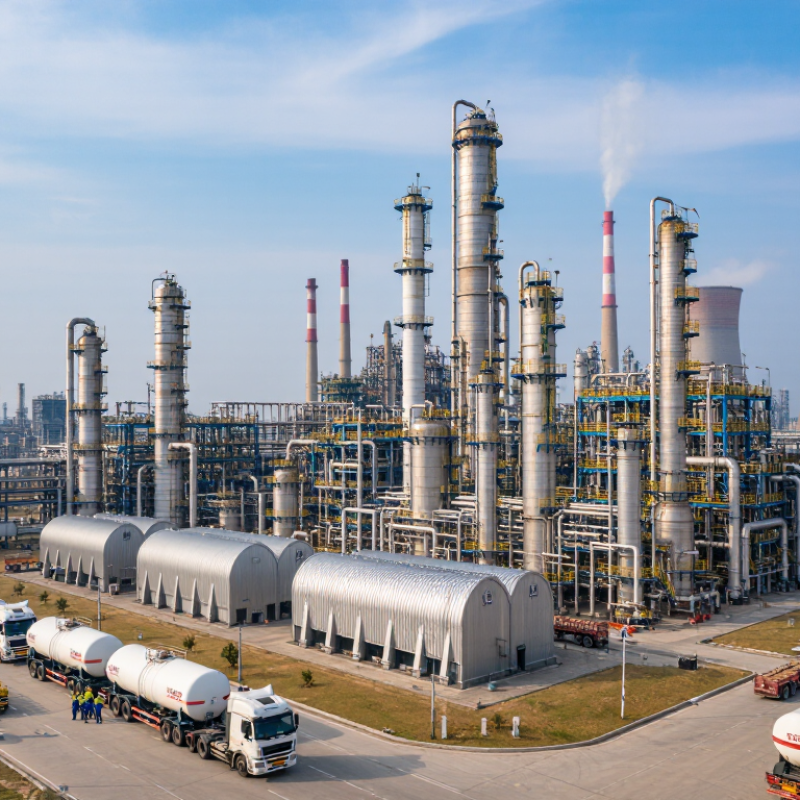
Selecting China’s top chemical manufacturers requires more than comparing production volume or export figures. I begin with verified operating experience, technical documents, and recent customer references. A polished website proves little. Details matter. I check factory licenses, quality certificates, audit records, and the actual scope of production. Certifications should match the facility, product, and current validity period.
Technical capability is equally important. The manufacturer should provide clear specifications, safety data, impurity limits, and consistent batch records. I request a representative sample, then compare its certificate of analysis with independent laboratory results. Packaging also deserves attention. A damaged 25-kilogram bag can expose weaknesses in moisture control, labeling, or warehouse handling. Skilled technical staff should answer practical questions without relying on vague promises.
Reliable supply depends on evidence, not confidence alone. I examine lead times, raw material controls, backup equipment, inspection frequency, and traceability from batch to shipment. Clear communication matters when specifications change or a delivery is delayed. No supplier performs perfectly every time. A late sample can reveal how honestly a team manages problems. I would score corrective action higher than a polished sales presentation. Pricing still matters, but unusually low quotations deserve careful review. The strongest candidates combine documented compliance, measurable quality, experienced personnel, and transparent risk management. My ranking would remain provisional until performance is observed across several shipments.
Overview of China’s Chemical Manufacturing Industry
China’s chemical manufacturing industry has grown into a broad, export-oriented production network. It covers basic chemicals, polymers, specialty materials, coatings, and formulated ingredients. Large industrial parks often place feedstock suppliers, processors, laboratories, and logistics services within one region. This structure can shorten transport distances and improve production coordination. It also creates dense technical communities. Engineers can exchange process knowledge quickly. Yet scale does not guarantee uniform performance. Quality systems differ between facilities, especially among smaller producers.
For US chemical buyers, supplier evaluation should go beyond price and stated capacity. Experienced teams typically review batch records, specification ranges, change-control procedures, and traceability documents. A plant visit can reveal practical details, such as sealed transfer lines, clean storage areas, and calibrated testing instruments. Independent laboratory testing adds another layer of confidence. Clear communication matters too. Technical data sheets may not explain moisture sensitivity, shelf life, or packaging limits. These details can affect processing results after ocean transport.
China’s industry is also investing in automation, energy efficiency, and cleaner production methods. Many facilities use digital monitoring to track temperature, pressure, and production deviations in real time. Progress is visible, but uneven. Some sites still rely heavily on manual checks. This deserves honest attention. Reliable partnerships grow through repeated samples, documented corrective actions, and realistic delivery planning. Buyers should test more than one batch before approving a long-term supply route. Local expertise helps, but independent verification remains valuable.
Profiles of the Ten Leading Chemical Manufacturers
China’s chemical manufacturing sector includes many capable producers, but scale alone does not prove reliability. This feature profiles ten leading manufacturers serving industrial supply chains connected with the US market. Their portfolios cover polymers, specialty additives, coatings ingredients, solvents, intermediates, and performance materials.
Each profile should examine production capacity, laboratory controls, export experience, and consistency between batches. Strong manufacturers usually provide clear safety data sheets, lot traceability, technical specifications, and responsive engineering support. Their facilities may use automated reactors, controlled-temperature storage, and documented quality checks. Still, a polished brochure is not proof. Independent testing and recent audit records matter more. Some suppliers may appear highly efficient, yet their documentation can be incomplete. That weakness deserves attention.
Tips: Compare at least three technical data sheets before requesting samples. Check whether product specifications match your process temperature, purity range, packaging needs, and storage conditions. Ask about change-notification procedures and production-site continuity. Review US documentation requirements, including applicable chemical inventory and workplace safety obligations. A small sample can reveal mixing problems, odor differences, or unexpected residue. Do not ignore these details. Reliable sourcing takes patience, and even experienced buyers sometimes approve a supplier too quickly.
China Top 10 Chemical Manufacturers for US Chemical Industry - Profiles of the Ten Leading Chemical Manufacturers
Anonymized comparison of major Chinese chemical manufacturing profiles and their relevance to the US chemical industry
| Rank | Anonymous Manufacturer Profile | Core Chemical Segments | 2023 Reported Group Revenue | Approx. Workforce | Main Product Families | US Industry Relevance | Production Footprint | Publicly Listed |
|---|---|---|---|---|---|---|---|---|
| 01 | Manufacturer Profile 01 | Integrated refining, petrochemicals and basic chemicals | Above RMB 2 trillion | More than 300,000 | Olefins, aromatics, synthetic resins, solvents and chemical intermediates | Large-scale source of commodity chemical feedstocks and intermediates | Multiple coastal and inland integrated complexes | Yes |
| 02 | Manufacturer Profile 02 | Oil and gas chemicals, polymers and specialty materials | Above RMB 2 trillion | More than 400,000 | Polyolefins, synthetic rubber, polyesters, fertilizers and additives | Broad feedstock portfolio for plastics, packaging, agriculture and manufacturing | Nationwide upstream, refining and chemical production network | Yes |
| 03 | Manufacturer Profile 03 | Polyurethanes, performance materials and specialty chemicals | RMB 150–200 billion | 20,000–30,000 | Polymeric methylene diphenyl diisocyanate, thermoplastic polyurethane and coatings materials | Relevant to insulation, refrigeration, footwear, automotive and construction applications | Large domestic sites with international manufacturing and sales operations | Yes |
| 04 | Manufacturer Profile 04 | Petrochemicals, polyester and refining | RMB 200–300 billion | 40,000–60,000 | Purified terephthalic acid, polyester chips, fibers and aromatic chemicals | Important for textile fibers, packaging polymers and industrial polyester chains | Highly integrated coastal refining and petrochemical complexes | Yes |
| 05 | Manufacturer Profile 05 | Refining, petrochemicals and advanced polymers | Above RMB 500 billion | 15,000–25,000 | Ethylene derivatives, polyolefins, aromatics and engineering plastics | Strong relevance to automotive, electronics, packaging and durable goods | Large-scale integrated coastal complex with dedicated logistics capacity | No |
| 06 | Manufacturer Profile 06 | Polyester, petrochemicals and synthetic fibers | RMB 100–160 billion | 30,000–50,000 | Polyester filament, staple fiber, purified terephthalic acid and related intermediates | Supports global textile, technical-fabric and packaging supply chains | Integrated coastal plants and downstream fiber facilities | Yes |
| 07 | Manufacturer Profile 07 | Synthetic fibers, polyester and chemical intermediates | RMB 50–80 billion | 20,000–35,000 | Polyester chips, filament yarn, industrial yarn and textile intermediates | Relevant to apparel, home textiles, tire cord and industrial-fabric producers | Clustered manufacturing bases in major eastern chemical regions | Yes |
| 08 | Manufacturer Profile 08 | Fluorochemicals, polymers and high-performance materials | RMB 20–40 billion | 10,000–20,000 | Fluoropolymers, refrigerant chemicals, fluorinated intermediates and electronic materials | Used in semiconductors, batteries, refrigeration, medical devices and chemical processing | Specialized domestic production sites with export-oriented facilities | Yes |
| 09 | Manufacturer Profile 09 | Fertilizers, phosphorus chemicals and specialty materials | RMB 50–80 billion | 15,000–25,000 | Phosphate fertilizers, phosphoric acid, electronic chemicals and feed additives | Relevant to agriculture, food production, water treatment and semiconductor processing | Resource-linked inland complexes with integrated phosphate processing | Yes |
| 10 | Manufacturer Profile 10 | Coal chemicals, fertilizers and industrial intermediates | RMB 20–40 billion | 10,000–20,000 | Methanol, polyoxymethylene, fertilizers, chlor-alkali products and fine chemicals | Supplies industrial plastics, agriculture, coatings, water treatment and manufacturing sectors | Large inland chemical park with integrated coal-to-chemicals operations | Yes |
Product Portfolios and Applications in the US Chemical Industry
China’s top ten chemical manufacturers serve the US market through broad, layered product portfolios. Their output commonly includes polymers, solvents, coatings, additives, electronic chemicals, and industrial intermediates. These materials support flexible packaging, vehicle components, insulation, water treatment, and semiconductor production.
Cefic’s 2024 Facts and Figures report places China at roughly 40% of global chemical sales. That scale helps Chinese producers offer multiple grades, larger volumes, and more flexible sourcing. USITC DataWeb records show chemical trade spans many tariff categories, not one simple product group. This matters for American buyers comparing purity, formulation, documentation, and delivery reliability.
Applications are highly specific. High-performance polymers can reduce weight in automotive parts. Coating resins protect steel structures from moisture and corrosion.
Electronic-grade chemicals require tighter impurity control than general industrial grades. The US Department of Energy identifies chemicals as one of five energy-intensive manufacturing sectors, increasing interest in lower-carbon production.
Yet portfolio size does not prove technical leadership. That assumption needs testing. Product samples, audit trails, batch consistency, and regulatory files still matter. The comparison is imperfect, because public data often combines commodity and specialty chemicals. Still, careful buyers can map each manufacturer’s products against US processing conditions, end-use standards, and supply risks.
Export Capacity, Compliance, and Market Challenges
China’s top ten chemical manufacturers should be assessed beyond production volume. Export capacity means more than filling containers on schedule. It includes stable feedstock, backup production lines, trained logistics teams, and reliable port coordination. A serious supplier should provide recent capacity data, realistic lead times, and shipment records. One delayed vessel can disrupt a US customer’s blending schedule.
Compliance requires practical evidence. Buyers should request current safety data sheets, certificates of analysis, batch traceability, and transport classifications. Materials entering the United States may require documentation aligned with TSCA, OSHA hazard communication rules, and applicable customs requirements.
Quality systems such as ISO-based procedures can support consistency, but certificates alone prove little. Audits should examine calibration logs, retention samples, corrective actions, and worker training. Details matter.
Market challenges remain uneven. Freight costs, changing trade controls, currency movements, and port congestion can quickly alter final pricing. Some manufacturers communicate well before a problem appears; others respond only after a missed shipment. That difference affects trust.
Rankings can mislead when they rely mainly on revenue or factory size. A smaller exporter may offer stronger technical support and clearer documentation. This is not always true. US buyers should compare verified performance, regulatory readiness, and contingency planning instead of accepting polished claims. Real experience often appears in ordinary records, not promotional language.
Related Posts
-
Top Tips for Efficient Chemical Manufacturing Procurement?
-

Top 10 Innovations Shaping the US Chemical Industry Today?
-
How to Optimize Chemical Manufacture Processes for Better Efficiency?
-

How to Find Reliable Chemical Producers in 2026?
-

2026 Best Opportunities in the US Chemical Industry for Buyers?
-
Top Dyes and Pigments Tips for Global Buyers?