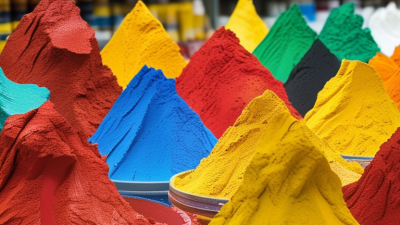
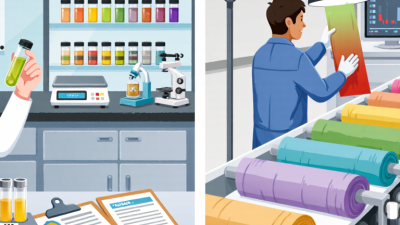
2026 Top Dyes and Intermediates Types for Global Buyers

Global buyers entering 2026 need a clearer view of dyes and intermediates, not merely a longer product list. Demand is shifting toward reactive, disperse, acid, direct, pigment, and solvent dyes. Each category serves different fibers, temperatures, fastness requirements, and processing equipment. Key intermediates support color strength, purity, reproducibility, and supply continuity.

Heike van de Kerkhof, former CEO of Archroma, has emphasized, “Sustainability is not a destination; it is a journey.” This principle matters in daily purchasing decisions. A buyer should examine wastewater performance, restricted-substance declarations, energy use, and production traceability. A bright blue sample means little if the next batch loses shade strength. Small differences matter.

The strongest sourcing process combines technical evidence with supplier experience. Review the certificate of analysis, safety data sheet, batch history, and application data before approving a product. Check how the dye performs on cotton, polyester, nylon, or blended fabric. Ask about minimum order quantities, lead times, packaging, and contingency stock. China, India, and other established manufacturing regions may offer competitive capacity, but price alone cannot prove reliability.

This guide examines the top dyes and intermediates types expected to influence global buying decisions in 2026. It also considers sustainability, compliance, quality control, and market practicality. Some forecasts may prove imperfect. Markets change quickly. That uncertainty deserves attention, not concealment.
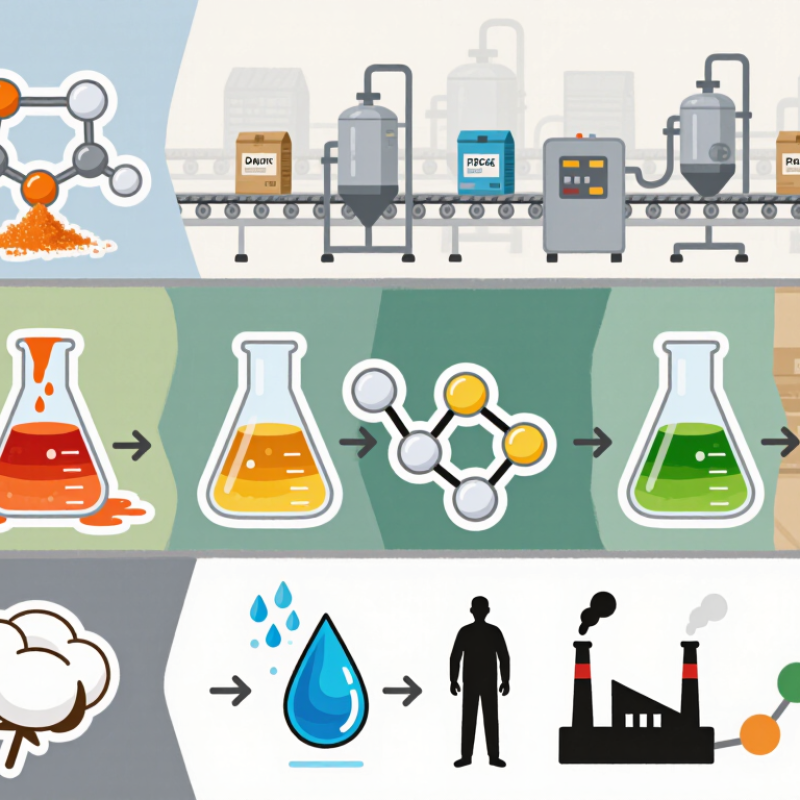
2026 Top Dyes and Intermediates Types for Global Buyers

Dye and Intermediate Categories Shaping Global Markets in 2026

2026 Top Dyes and Intermediates Types for Global Buyers

Dye and intermediate categories are shaping global markets in 2026 through performance, traceability, and resource efficiency. Reactive dyes remain important for cotton because they deliver bright shades and strong wash fastness. Disperse dyes support polyester production, especially in sportswear and home textiles. Acid dyes continue serving wool, nylon, and specialty fibers. Direct dyes offer simpler application, although their fastness can vary between shades.

Intermediate demand is also becoming more specific. Buyers are reviewing sulfonated aromatic intermediates, aniline derivatives, and heterocyclic compounds for consistent purity and reliable batch performance. Low-salt dye systems and concentrated formulations can reduce wastewater loads. Bio-based claims are growing, but they still require careful verification. No category is perfect.

Tips: Request a recent technical data sheet, safety data sheet, and batch certificate. Check color strength, moisture, solubility, and impurity limits before volume orders. A small lab dip can reveal shade drift early. Ask about wastewater behavior and packaging conditions. Traceability matters.

Global buyers should compare more than price. Production experience, testing capacity, and transparent documentation often indicate stronger supply reliability. Digital batch tracking may improve audits, but records can still be incomplete. Buyers should verify origin, storage conditions, and export documentation independently. This practical review reduces surprises when formulations move from laboratory trials to continuous production.

Key Performance Features of Major Dye Types

In 2026, global buyers are comparing dyes by performance, not shade alone. Reactive dyes bond well with cotton and provide bright, wash-resistant colors. They suit shirts, towels, and home textiles. Disperse dyes work effectively on polyester because their small particles enter synthetic fibers under heat. Their strength is color uniformity, although poor dispersion can create cloudy shades.

Acid dyes Acid dyes offer vivid tones on wool, nylon, and some silk products. They provide smooth leveling and useful brilliance. Direct dyes are economical and simple to apply, but their wet fastness may need improvement. Vat dyes deliver excellent resistance to washing, light, and chemicals. Their processing is more demanding, and shade control requires trained operators. Dye intermediates also matter. Consistent purity supports stable color strength, cleaner filtration, and fewer batch adjustments. No type wins every test.

Tips: Ask for technical data, sample swatches, and batch-to-batch test results. Check wash, rubbing, light, and perspiration fastness under your actual fabric conditions. A small pilot run can reveal problems hidden by laboratory data. Confirm wastewater requirements before purchase. I have seen buyers focus on price, then face uneven shades and repeated reprocessing. That choice saves money only on paper. Supplier documentation should be clear, current, and traceable. Consistency remains difficult.

Essential Intermediates Behind Modern Dye Production

2026 Top Dyes and Intermediates Types for Global Buyers

Essential Intermediates Behind Modern Dye Production

Modern dye production depends on carefully selected intermediates, not only finished colorants. Aromatic amines support many azo dyes, while anthraquinone intermediates help create strong blues, violets, and greens. Heterocyclic compounds can improve brightness, heat resistance, and shade stability. Sulfonated intermediates often improve water solubility for textile and paper applications.

In practical purchasing, consistency matters more than a low first quotation. A small impurity change may shift hue, reduce fixation, or create uneven fabric batches. Experienced buyers should review assay results, moisture content, solubility, particle form, and batch-to-batch color data. Reliable suppliers should also provide traceable specifications, safety documentation, and realistic production capacity. Sustainability deserves attention, too. Lower-impact synthesis, controlled solvent use, and wastewater compatibility are becoming important selection factors. Yet no checklist is perfect. A specification can look excellent on paper and still perform poorly in a real dyeing line.

Tips: Request a representative sample from each production lot. Test it under your actual temperature, pH, and dosage conditions. Compare shade strength after washing, not only after application. Keep retained samples for later investigation. Ask how impurities are controlled, rather than accepting broad purity claims. Small details matter. A short technical call with the producer may reveal limitations that documents miss.

Buyer Selection Criteria for Different Industrial Applications

2026 Top Dyes and Intermediates Types for Global Buyers

Global buyers in 2026 will not select dyes by shade alone. Application decides the evidence required. For cotton, reactive dyes need strong fixation, wash fastness, and controlled hydrolysis. Polyester production deserves special attention. Textile Exchange’s Materials Market Report 2024 recorded 124 million tonnes of global fiber production in 2023, with polyester representing 57%. Therefore, disperse dyes should be tested for heat stability, sublimation resistance, and migration during finishing.

For coatings and plastics, pigment dispersions need reliable particle size, weather resistance, and low bleeding. A colorant that performs well on fabric may fail inside a molded component. Paper producers usually prioritize water compatibility, high tinting strength, and minimal foaming. Leather applications require flexible films and resistance to rubbing. Intermediate buyers should examine purity, impurity profiles, batch consistency, and reaction yield, not only the quoted price. Small differences can disrupt downstream synthesis.

Professional screening should include certificates of analysis, safety data, traceability records, and realistic application trials. The OECD Due Diligence Guidance supports stronger supply-chain verification, especially where chemical risks and environmental claims are involved. Smithers’ 2024 dyes and pigments review also highlights continued demand for higher-performance systems and digital application methods. Yet forecasts are not guarantees. I would not treat a projected growth rate as purchasing evidence. A cheaper intermediate can create costly shade variation, extra filtration, or failed compliance checks. Test the material under factory conditions. That detail is often missed.

2026 Top Dyes and Intermediates Types for Global Buyers

Buyer selection criteria differ by industrial application. The index below ranks the relative importance of technical performance, regulatory compliance, cost efficiency, supply reliability, and sustainability when sourcing major dye and intermediate categories.

Priority index: 0 = low importance, 100 = critical importance. Reactive dyes are commonly used for cellulosic textiles, disperse dyes for polyester, acid dyes for wool and nylon, pigment preparations for coatings and printing, and key intermediates support dye manufacturing and performance optimization.

Global Sourcing, Compliance, and Supply Considerations in 2026

In 2026, global buyers are evaluating dyes and intermediates beyond shade, price, and nominal purity. Reactive, disperse, acid, pigment, and optical brightener categories each create different sourcing risks. A reliable specification should state assay, moisture, insoluble matter, color strength, particle size, and packaging conditions. Keep it practical. Ask for a current SDS, certificate of analysis, production date, and transport classification before approving a shipment. Supplier audits should examine traceability, worker protection, wastewater controls, and change-management records.

Compliance now follows the shipment from factory gate to finished textile. Buyers should screen destination-country chemical inventories, restricted-substance lists, labeling rules, and import documentation. Requirements can differ between a dye, its intermediate, and a formulated mixture. Do not rely on an old declaration. Request updated composition statements and test evidence when regulations or customer standards change. Independent laboratory testing can verify heavy metals, formaldehyde, banned aromatic amines, and other controlled parameters where relevant. The exact testing panel should match the application and market.

Supply planning needs more than a low offer. Map raw-material origins, approved production sites, port exposure, minimum order quantities, and realistic lead times. Dual sourcing may improve resilience, but two suppliers can still depend on one upstream chemical. Reserve capacity before peak textile seasons, and define acceptable batch variation in the contract. Keep retain samples for comparison. It helps when a shade shifts. Not every disruption is predictable. A 2026 sourcing decision should balance landed cost, evidence quality, environmental performance, and the supplier’s willingness to disclose uncomfortable gaps. Some data will remain incomplete; record the uncertainty instead of hiding it.

2026 Top Dyes and Intermediates Types for Global Buyers - Global Sourcing, Compliance, and Supply Considerations in 2026
Product Type Representative Substance or Family CAS Reference Primary Applications Key Performance Attributes Main Compliance Considerations Sourcing and Supply Considerations Buyer Documentation Checklist
Reactive Dye Reactive Black 5 and other bifunctional reactive dyes 17095-24-8 Cotton, viscose, modal, linen, and other cellulosic fibers Strong covalent fixation, broad shade range, good wash fastness, and suitability for continuous and exhaust dyeing Screen for hydrolyzed dye content, restricted aromatic amines, formaldehyde, heavy metals, and wastewater color load; evaluate alignment with REACH and textile chemical MRSL requirements Salt and alkali consumption, fixation rate, effluent treatment capacity, and batch-to-batch shade consistency are important cost and continuity factors SDS, technical data sheet, certificate of analysis, restricted-substance test report, fixation data, and effluent guidance
Acid Dye Acid Orange 7 and sulfonated acid-dye families 633-96-5 Wool, polyamide, silk, leather, and selected protein-based materials High water solubility, bright shades, good leveling, and flexible application under acidic conditions Check for carcinogenic or sensitizing impurities, restricted aromatic amines, heavy metals, and wastewater discharge requirements Fiber-specific compatibility, pH control, leveling behavior, and shade reproducibility should be validated before large-volume purchasing SDS, CoA, impurity profile, pH application range, fastness data, and compliance declaration
Disperse Dye Disperse Orange 3 and low-temperature polyester dye families 730-40-5 Polyester, acetate, and other hydrophobic synthetic fibers Suitable for aqueous dispersion systems, strong build-up on polyester, and broad high-temperature application capability Some disperse dyes may be classified as skin sensitizers; screen for restricted dyes, carcinogenic amines, allergenic substances, and carrier residues Particle size, dispersion stability, sublimation fastness, oligomer control, and compatibility with digital or conventional finishing processes affect supply performance SDS, particle-size data, allergen and sensitizer screening, fastness report, and restricted-substance test results
Direct Dye Direct Blue 86 and substantive dye families 1330-38-7 Cellulosic fibers, paper, regenerated cellulose, and selected blended materials Simple application process, strong substantivity, economical coloration, and broad shade availability Check for restricted aromatic amines, heavy metals, formaldehyde, and wash-off residues; assess wastewater color and salt loading Lower fixation than reactive dyes can increase washing demand; buyers should compare total process cost rather than purchase price alone SDS, CoA, application recipe, wash-fastness data, restricted-substance report, and wastewater information
Basic or Cationic Dye Basic Violet 3 and cationic dye families 548-62-9 Acrylic fibers, paper, leather, inks, and selected plastic applications Very high tinctorial strength, brilliant shades, and strong affinity for acrylic fibers Basic Violet 3 is subject to regulatory scrutiny in several markets; buyers should verify carcinogenicity classifications, impurity controls, and end-use restrictions High color strength requires accurate dosing; migration, light fastness, and compatibility with auxiliaries should be confirmed for each application SDS, regulatory status statement, impurity profile, heavy-metal report, light-fastness data, and end-use declaration
Organic Pigment Copper phthalocyanine blue, commonly referred to as Pigment Blue 15:3 147-14-8 Printing inks, coatings, plastics, synthetic fibers, and packaging materials Excellent light fastness, strong chemical resistance, high heat stability, and strong blue coloration Control residual solvents, heavy metals, halogenated by-products, particle emissions, and application-specific packaging restrictions Crystalline form, surface treatment, particle-size distribution, dispersibility, and compatibility with the selected resin or ink system influence performance SDS, pigment form specification, particle-size data, heavy-metal test, residual-solvent report, and migration data where applicable
Vat Dye Indigo and anthraquinone-based vat dye families 482-89-3 for indigo Denim, workwear, durable cotton textiles, and industrial fabrics Excellent wash and light fastness after oxidation, durable coloration, and established denim processing performance Monitor reducing agents, alkali, formaldehyde, restricted amines, heavy metals, and wastewater parameters generated during vatting and oxidation Redox control, oxidation efficiency, liquor management, and wastewater treatment capacity are critical for stable production SDS, redox application data, CoA, fastness report, restricted-substance test, and wastewater handling guidance
Aromatic Intermediate Aniline and substituted aniline intermediates 62-53-3 for aniline Manufacture of dyes, pigments, polyurethane materials, rubber chemicals, and specialty chemicals Versatile feedstock platform with broad downstream conversion options Hazard classification, worker exposure, transport controls, residual nitro compounds, heavy metals, and REACH registration or downstream-user obligations may apply Availability is linked to upstream benzene and nitro-aromatic capacity; storage, temperature control, and hazardous-goods logistics require planning SDS, CoA, purity specification, impurity profile, REACH status, transport classification, and batch traceability
Aromatic Intermediate p-Phenylenediamine and related diamine intermediates 106-50-3 Manufacture of azo dyes, high-performance polymers, rubber chemicals, and selected cosmetic color systems High reactivity and broad utility in azo coupling and polymer-related synthesis Potential skin sensitization and toxicity concerns require strict occupational controls; verify impurities, exposure controls, and market-specific registration obligations Purity, oxidation stability, packaging integrity, and controlled handling are important for both quality and worker safety SDS, CoA, purity and impurity limits, sensitization information, handling instructions, and regulatory registration evidence
Sulfonated Intermediate H-acid and related naphthalene-sulfonic acid intermediates 90-30-2 for H-acid Production of reactive, acid, direct, and specialty azo dyes Provides water-solubilizing sulfonic acid functionality and supports a wide range of azo-dye structures Check purity, residual naphthalene compounds, heavy metals, inorganic salts, and wastewater impact; confirm compliance with destination-market chemical rules Moisture content, assay, salt level, filterability, and consistency of sulfonation affect downstream yield and shade performance SDS, CoA, assay and moisture data, salt specification, impurity profile, origin statement, and batch traceability
Azo Intermediate Diazonium and coupling-component systems Substance-specific Manufacture of azo dyes for textiles, leather, paper, inks, and coatings Enables broad shade design and tunable hue, strength, and application properties Strictly screen for carcinogenic aromatic amines; EU REACH Annex XVII restrictions commonly limit releasable listed amines from certain articles to 30 mg/kg, subject to scope and test method Temperature control, reaction stability, water content, transport classification, and short shelf life may affect supply planning SDS, CoA, aromatic-amine screening, reaction and storage guidance, regulatory declaration, and emergency-response information
Buyer note: Regulatory status depends on the exact substance, concentration, article type, processing method, and destination market. Global buyers should confirm current requirements under applicable chemical, wastewater, worker-safety, packaging, and textile standards before purchase and production approval.
Enquire Now